Blog

  • 4-Step Easy Pineapple Cakes: The Tropical Bundt!

    4-Step Easy Pineapple Cakes: The Tropical Bundt!

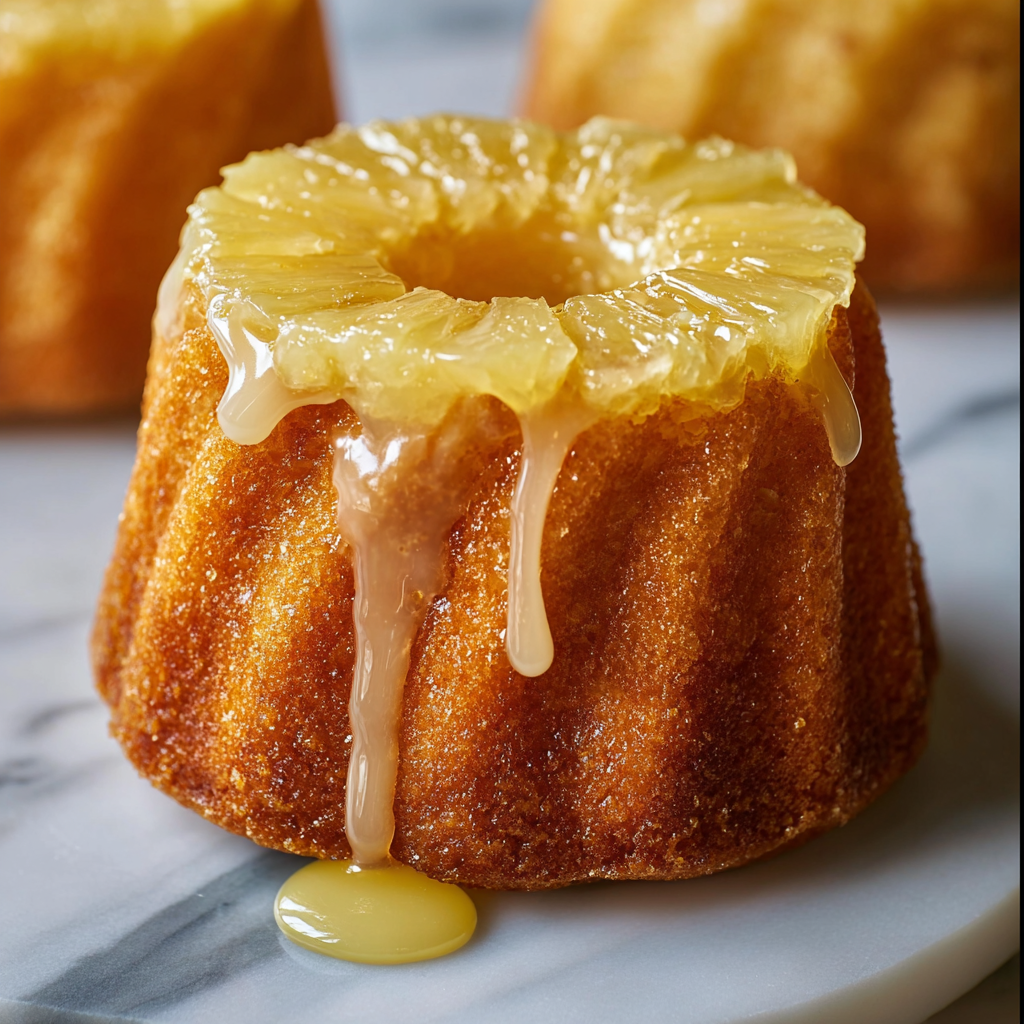
    I drizzled the glaze on while my Pineapple Cakes were still steaming hot from the oven. It disappeared immediately. Mia watched and said it was like magic but sadder. Leo tasted one, shrugged, and said he could not tell the difference. I could. I stood there with an empty jug and nothing to show for it. Cool the cakes first. Always cool the cakes first.

    Why This Recipe Is Special

    There is something about a mini cake that makes people unreasonably happy. Something about the individual size, the fact that it is entirely yours, and no sharing required makes Mia pick them up and examine them like she is appraising something valuable. These mini pineapple cakes are moist in a way that feels almost impossible given how simple the batter is. The pineapple juice works directly into the crumb, giving every bite a bright tropical sweetness that doesn’t taste artificial or overworked. And the pineapple juice glaze on top once you learn to apply it at the right temperature, which I now know sets into a sticky, glossy coat that makes each little cake look like it belongs in a bakery window.

    How To Make Pineapple Cakes

    After the glaze disaster I already told you about, I made three more batches in the same week trying to perfect the texture. Batch two was too dense; I had overmixed the batter and developed too much gluten. Leo ate it politely and said nothing, which is actually a worse sign than a face. Batch three was underbaked in the center, and Mia detected this immediately with her fork, the way she always does, and held it up to the light like forensic evidence. Batch four was the one. Light crumb, clear pineapple flavor all the way through, and a glaze that actually sat on top and did its job.
    Main Ingredients

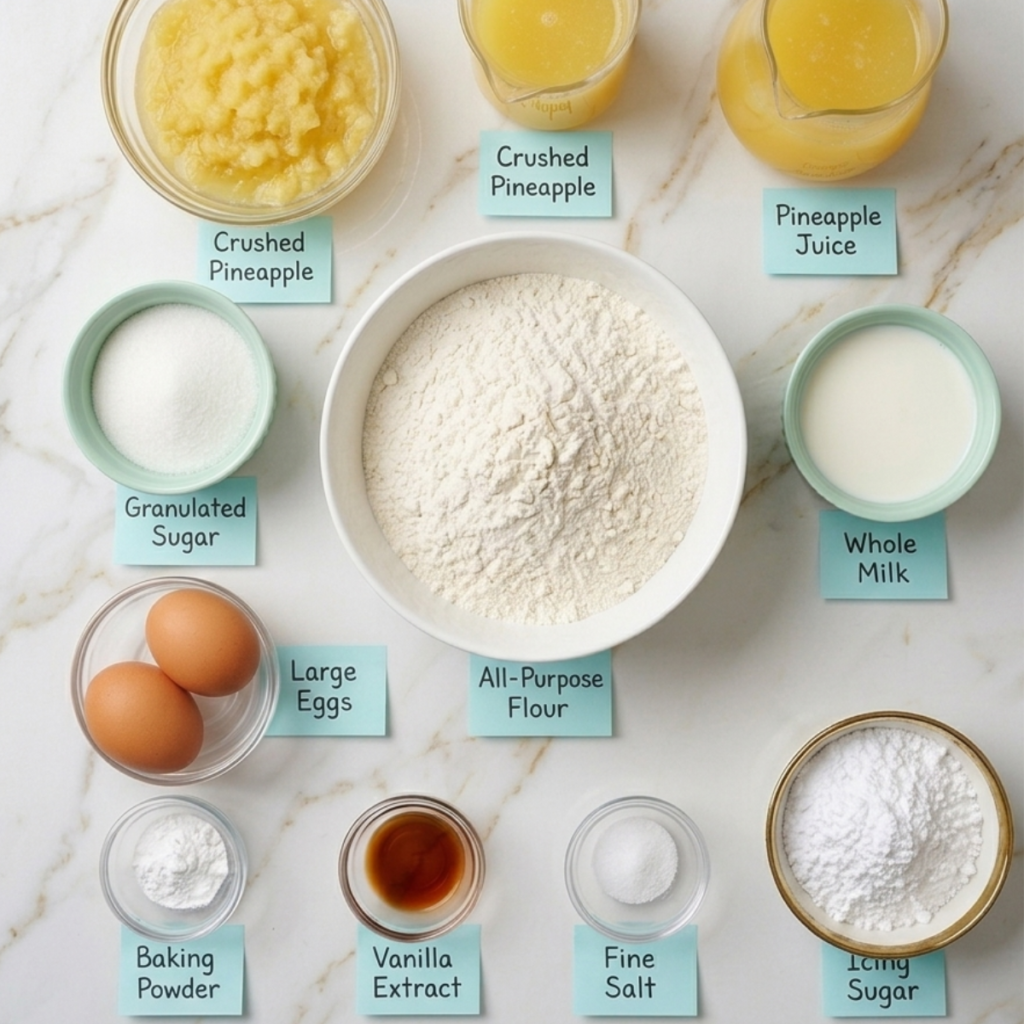
    • 1 cup plain all-purpose flour: spooned and levelled, not scooped; too much flour makes the crumb dense
    • ½ cup pineapple juice (from a can of crushed pineapple): the flavour carrier for the entire cake; use juice from the tin, not bottled
    • ½ cup crushed pineapple, well drained: drain thoroughly or the batter becomes too wet; reserve the juice for the glaze
    • ½ cup granulated sugar: the pineapple is already sweet so this doesn’t need to be heavy
    • ¼ cup unsalted butter, melted and cooled: melted butter gives a denser, moister crumb; cool it before using or it cooks the eggs
    • 2 large eggs, room temperature: room-temp eggs mix more evenly; cold eggs can make melted butter seize
    • ¼ cup whole milk: full-fat only; lower-fat milk makes these noticeably drier
    • 1½ tsp baking powder: check it is not expired; small batters need every bit of lift
    • 1 tsp pure vanilla extract: rounds the pineapple flavour; don’t skip it
    • ¼ tsp fine salt: sharpens the sweetness; always in a sweet bake

    For the Pineapple Juice Glaze

    • 1 cup icing sugar, sifted: sifting prevents lumps from forming in the glaze
    • 3 to 4 tbsp pineapple juice: add gradually until you reach a thick but pourable consistency
    • Pinch of salt: cuts through the sweetness and makes the pineapple flavour brighter

    Step-by-Step Instructions

    Step 1: Prep the Pan and Preheat

    • Preheat oven to 175°C (350°F) and generously grease a 12-cup mini bundt or muffin pan.
    • Drain the crushed pineapple thoroughly through a fine sieve, pressing gently; reserve all the juice.
    • Measure out ½ cup of the reserved juice for the batter and set the rest aside for the glaze.
    • Melt butter and let it cool to room temperature before using; warm butter can cook the eggs.

    Step 2: Mix the Batter
    • Whisk together flour, baking powder, and salt in a large bowl; make a well in the center.
    • In a separate bowl, whisk eggs, sugar, melted butter, milk, pineapple juice, and vanilla until smooth.
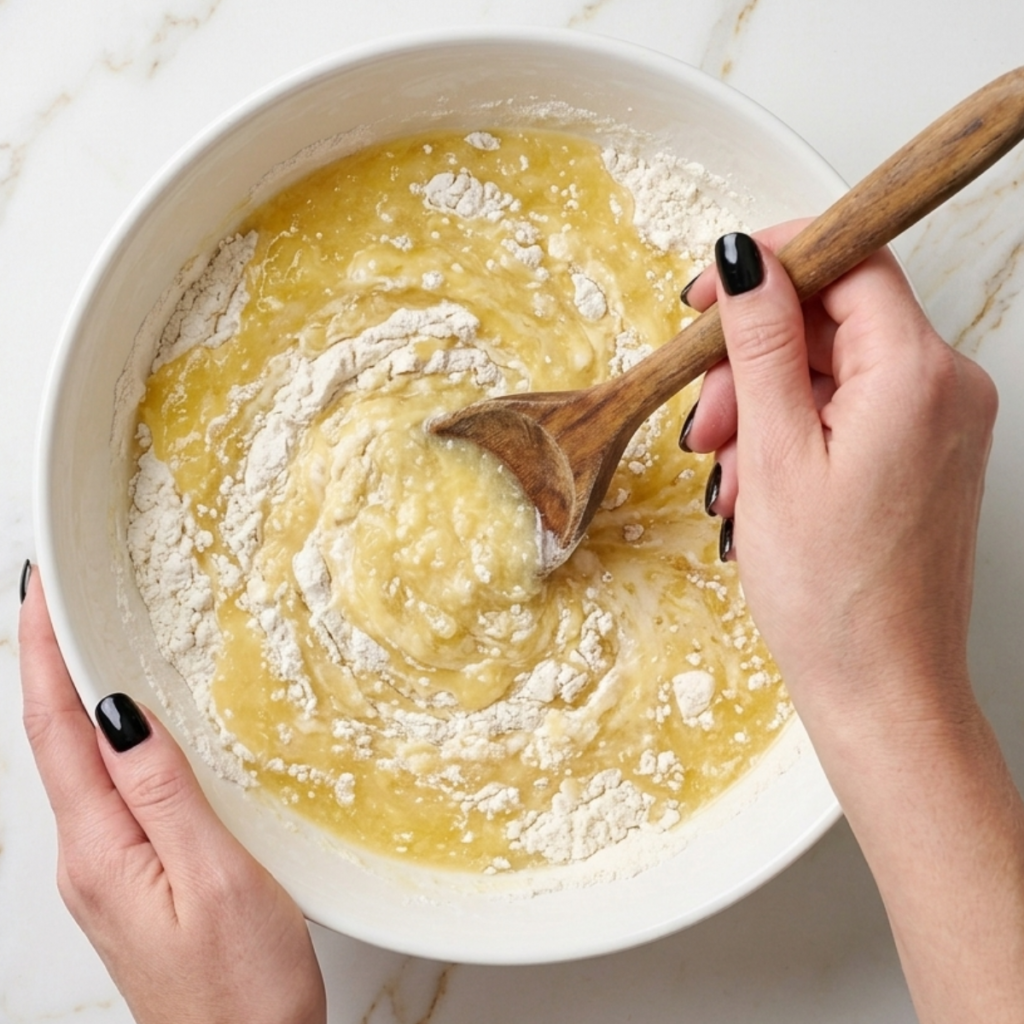
    • Pour wet ingredients into the dry ingredients and stir gently until just combined: stop the moment the flour disappears.
    • Fold in the drained crushed pineapple with a spatula; the batter will be slightly thick, and that is correct.

    Step 3: Fill and Bake
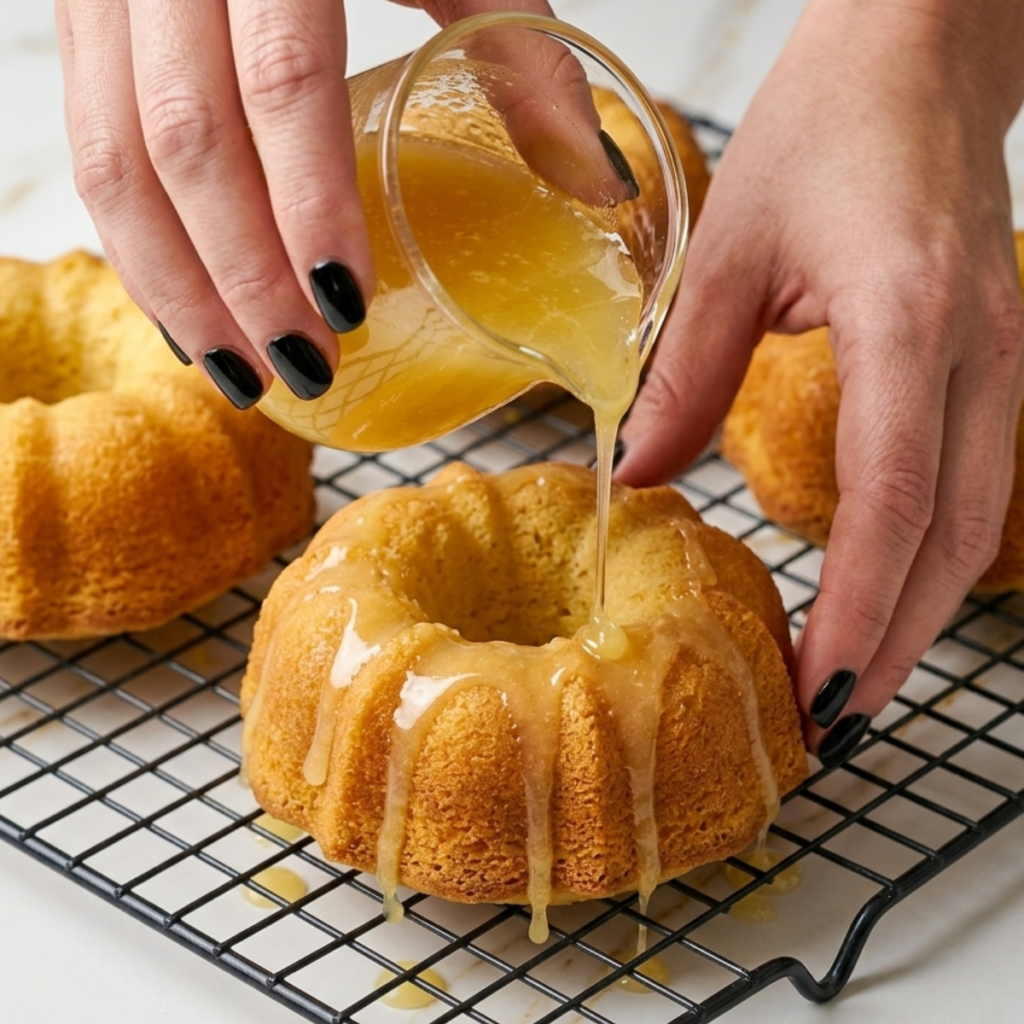
    • Fill each cup of the prepared pan no more than halfway; these cakes rise considerably.
    • Tap the pan firmly on the counter twice to release any air pockets in the batter.
    • Bake for 22 to 25 minutes until a skewer inserted in the center comes out clean and tops are golden.
    • Cool in the pan for 8 minutes before turning out onto a wire rack to cool completely.

    Step 4: Make the Glaze and Finish

    • Whisk sifted icing sugar with 3 tablespoons of pineapple juice and a pinch of salt until smooth and pourable.
    • Add the fourth tablespoon of juice only if needed; the glaze should coat a spoon, not run off it.
    • Wait until cakes are completely cool to room temperature, not warm, not barely warm, but completely cool.
    • Spoon glaze slowly over each cake and let it drip naturally down the sides; do not rush this step.

    Pineapple Cakes Variations

    Pineapple Bundt Cake with Coconut Glaze

    Make the batter as written, but pour it into a single greased 9-inch bundt pan instead of the mini cups. Bake for 45 to 50 minutes. For the glaze, replace 1 tablespoon of pineapple juice with coconut cream and scatter toasted coconut flakes over the top before the glaze sets. Leo called this version “the fancy one” and requested it for his birthday, which I am taking as a permanent mandate.

    Mia’s Pineapple Upside-Down Mini Cakes

    Place a small pineapple ring and a maraschino cherry in the bottom of each greased muffin cup before pouring in the batter. Bake as directed and invert immediately while still warm. Mia discovered this variation by accident when she put decorations in the tin “to make them prettier” before I poured the batter. She was not wrong. They are significantly prettier and they taste even better, and she has not let me forget her role in inventing them.

    Pineapple Juice Cake With Pudding

    Add one small packet (3.4 oz) of instant vanilla pudding mix directly to the dry ingredients before mixing. The pudding adds moisture, density, and a faint creaminess that makes these feel like a pineapple juice cake with pudding from a box but genuinely better because everything else is from scratch. The texture becomes almost custard-like at the center, ideal for serving warm with a scoop of vanilla ice cream.

    Substitutions

    Fresh pineapple juice → Canned pineapple juice: Canned is actually preferred; the acidity is more consistent. Fresh pineapple juice contains bromelain, an enzyme that can interfere with the batter’s structure if used in large quantities.

    Whole milk → Coconut milk: Full-fat coconut milk works as a direct 1:1 swap and adds a faint coconut note that pairs beautifully with pineapple. It also makes the crumb slightly more tender.

    Plain flour → Gluten-free 1:1 baking flour: Works well with no other adjustments. The crumb is slightly more delicate, so handle the cakes gently when turning out. The glaze works identically.

    Butter → Refined coconut oil: Use refined, not virgin, melted and cooled in the same quantity. The flavor is neutral, and the texture is nearly identical. Makes the recipe dairy-free if you also swap the milk.

    Equipment

    • 12-cup mini bundt pan or standard muffin tin
    • Two large mixing bowls
    • Fine mesh sieve (for draining pineapple and sifting icing sugar)
    • Whisk
    • Rubber spatula
    • Skewer or toothpick for testing
    • Wire cooling rack non-negotiable for the glaze step
    • Small jug or spouted bowl for pouring glaze

    Storage Tips

    Make Ahead

    • Bake cakes up to 1 day ahead; store unglazed at room temperature covered.
    • Make the glaze fresh on the day you serve it; it thickens in the fridge.

    Room Temperature

    • Glazed cakes keep at room temperature for up to 2 days loosely covered.
    • The glaze softens slightly by day 2, and is still delicious.

    Refrigerator

    • Airtight container up to 4 days; bring to room temperature before serving.
    • Cold cakes lose their tropical freshness; always serve at room temperature.

    Freezing

    • Freeze unglazed cakes individually wrapped for up to 2 months.
    • Thaw at room temperature, then glaze fresh before serving.

    Family Secret Worth Sharing

    The temperature of the glaze meeting the cake is the whole game with these. I learned this the hard way a hot cake is too porous and too warm to hold any kind of glaze; it just absorbs it and disappears, exactly the way mine did on the first attempt. But there is also a window going the other direction: if the glaze itself is too thick when you pour it, it sits in a clump on top instead of draping naturally down the ridges of the bundt shape. The perfect moment is a completely cooled cake and a glaze that is just barely thick enough to coat the back of a spoon. Mia now tests the glaze consistency before every batch by running a spoon through it and watching how it falls. She calls this quality control. She does it with the solemnity of a professional. Leo stands nearby and waits for the leftover glaze in the jug, which is always his job and which he takes very seriously.

    Troubleshooting FAQs

    Why did my glaze disappear into the cake?
    The cake was not fully cooled. This is the exact mistake I made on batch one. A warm cake is essentially a sponge; it pulls the glaze straight in. Give the cakes a full 30 minutes on the wire rack at room temperature before you go anywhere near the glaze jug. Patience is the only fix here.

    My cakes are dense and heavy what went wrong?
    Almost certainly overmixing. Once the wet and dry ingredients meet, stir only until the flour disappears. Every extra stir after that develops gluten and compresses the crumb. Also check that your baking powder isn’t expired; old baking powder and a small batter like this don’t get on well.

    Can I use a blender to mix the batter?
    Yes, briefly, this is effectively a pineapple cake made with a blender, and it works well. Blend the wet ingredients, including the pineapple, first until smooth, then fold in the dry ingredients by hand with a spatula. Do not blend the full batter; the gluten development will make the cakes tough.

    Can I make this as one large pineapple cake instead of mini cakes?
    Absolutely. Pour the batter into a greased 8-inch round or square tin and bake at 175°C for 30 to 35 minutes. The same glaze works perfectly. Check at 30 minutes with a skewer; the center should come out clean. The glaze rule is the same: completely cool before you pour.

    Twelve Little Cakes and Zero Left by Morning

    I make these on Friday afternoons now, when the week is winding down and both kids can sit at the counter and watch without being rushed somewhere. Leo does the spoon-tapping on the counter to release the air. Mia does the glaze quality control with enormous seriousness. And then we wait properly this time, the full thirty minutes, and the cakes come out golden and sticky and smelling like every good tropical thing at once. The cooling rack is always empty by the time we wake up on Saturday. That is the only review I need.

    If you are building your collection of easy dessert recipes that actually deliver something special, these mini pineapple cakes belong on that list. They sit right alongside our healthy brownie recipe as a bake that looks more impressive than the effort involved. And if you want more sweet baking ideas worth trying, the banana bread world is just one click away for another delightful fruit-forward bake.

    Don’t forget to snap a picture of your pineapple cakes before that golden glaze disappears along with the cakes themselves (trust me, it will disappear quickly!), and leave a rating below. We’d love to hear how these pineapple cakes become part of your weekend baking story.
  • 5 Secrets to the Best Shrimp and Orzo

    5 Secrets to the Best Shrimp and Orzo

    Mia looked into her bowl, looked up at me, and said, “Mom, this smells like the beach but in a bad way.” I had added the lemon at the wrong time and curdled something; I am still not entirely sure what. My shrimp and orzo looked genuinely distressed. Leo tried a bite and made a face. I quietly started over. Nobody mentions that evening anymore.

    Why This Recipe Is Special

    There is a very short list of dinners in this house that make everyone sit down without negotiation. This shrimp and orzo are on that list. It has the kind of flavor that tastes like you have been cooking for an hour: garlicky, bright with lemon, and creamy without being heavy, and it comes together in about twenty minutes if you stay organized. The orzo absorbs everything as it cooks directly in the broth, which means every single grain is flavored all the way through, not just on the surface. Leo scrapes the bowl. Mia asks if there is more. Those two things together are the highest possible rating a recipe can receive in this kitchen.

    How To Make Shrimp and Orzo

    After the beach-smell disaster, I learned two things fast. First, lemon goes in at the end, off the heat; otherwise, the acidity does something unpleasant to the butter and broth. Second, orzo cooks like risotto; it needs liquid added gradually and needs to be watched, because the moment you forget it, it turns into a very committed paste. Leo coined that version of shrimp cement, and the name has stuck permanently in our kitchen vocabulary. Mia reminded me of it just last week, which is how I know it made an impression. The corrected version, which is what you have here, is genuinely one of the best things I make.

    Main Ingredients

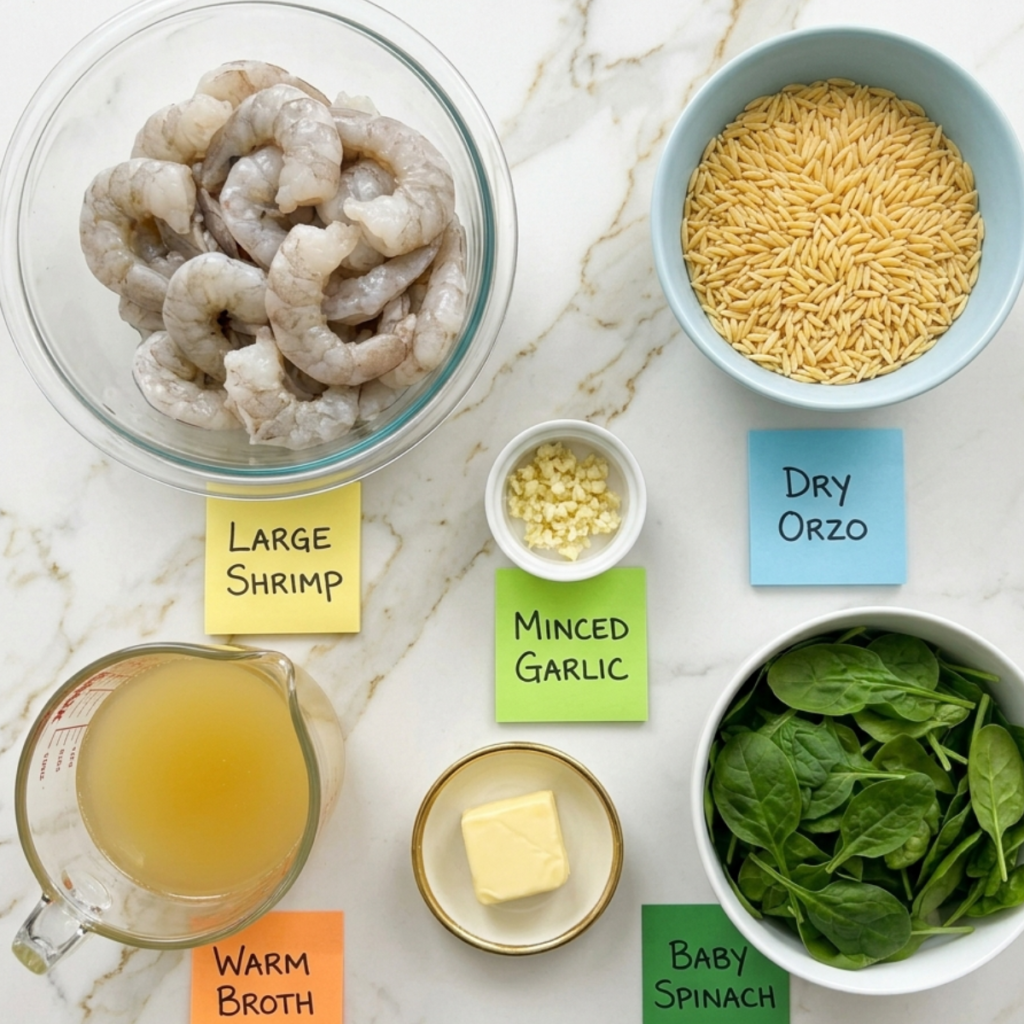
    • 1½ lbs large shrimp, peeled and deveined: pat completely dry before seasoning; wet shrimp steam instead of sear and you lose that golden crust
    • 1½ cups dry orzo pasta: toasting it in butter for 2 minutes before adding liquid is the move that changes everything
    • 3½ cups chicken or seafood broth, warm: warm broth keeps the orzo cooking evenly; cold broth shocks the pan and slows everything down
    • 5 cloves garlic, finely minced: this is a garlic-forward dish; don’t reduce it
    • 3 tbsp unsalted butter, divided: 1 tbsp for toasting orzo, 2 tbsp for finishing the sauce with richness
    • 2 tbsp olive oil: for searing the shrimp; it handles higher heat than butter without burning
    • 2 cups fresh baby spinach: wilts in about 60 seconds from residual heat; adds colour without changing the flavour
    • ½ cup freshly grated parmesan: stir in at the very end for creaminess; pre-grated from a bag won’t melt as smoothly
    • 1 lemon, zest and juice: added off heat only; this was the lesson that cost me one full batch and Mia’s respect
    • ½ tsp red pepper flakes (optional): the heat plays beautifully against the lemon and butter
    • Salt and black pepper to taste
    • Fresh parsley, chopped, for garnish

    Step-by-Step Instructions

    Step 1: Season and Sear the Shrimp

    • Pat shrimp completely dry with paper towels and season with salt, pepper, and red pepper flakes.
    • Heat olive oil in a large deep skillet over medium-high heat until shimmering.
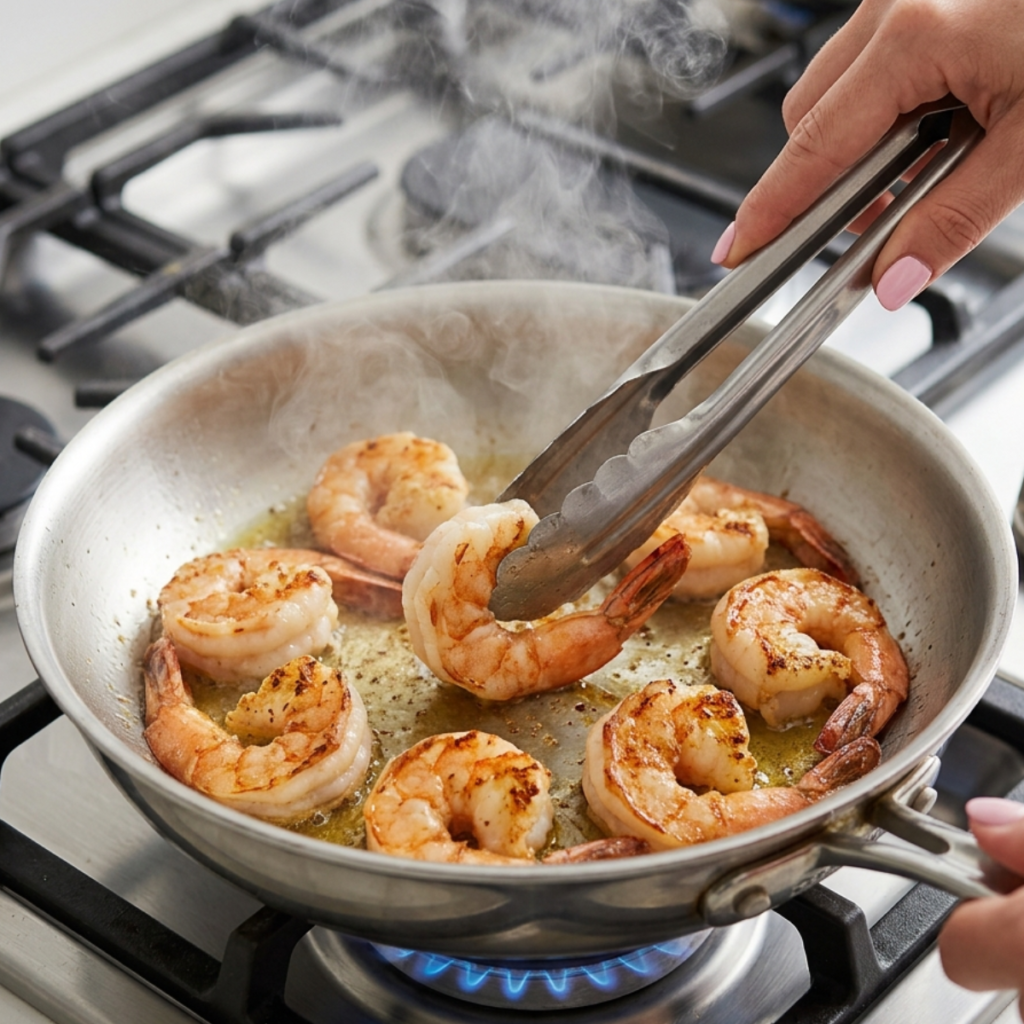
    • Add shrimp in a single layer and cook 1 to 1½ minutes per side until pink and lightly golden at the edges.
    • Transfer to a plate and set aside; they will finish in the sauce at the end.

    Step 2: Toast the Orzo and Bloom the Garlic

    • Reduce heat to medium and add 1 tablespoon of butter to the same pan.
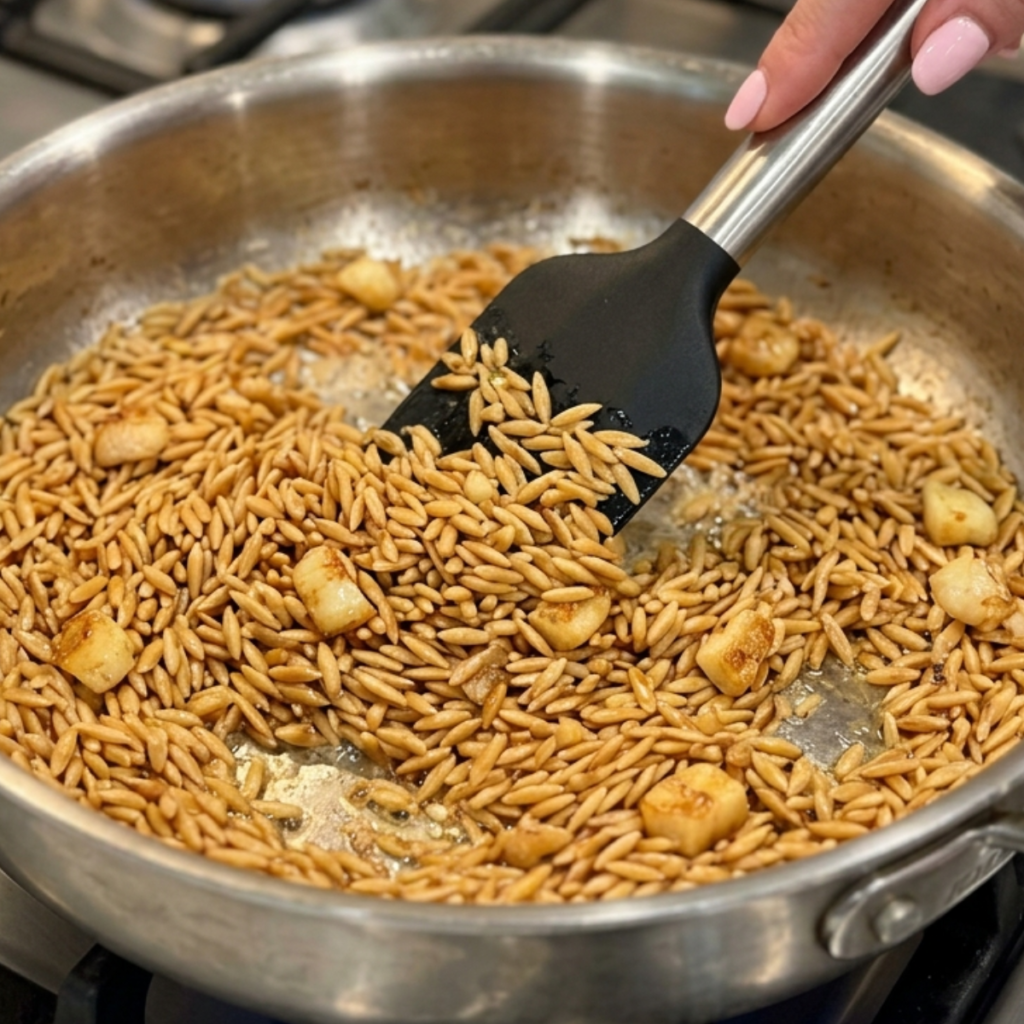
    • Add the dry orzo and stir constantly for 2 minutes until lightly golden and nutty-smelling.
    • Add the minced garlic and stir for 30 seconds until fragrant and just golden, not brown.
    • Pour in 1 cup of warm broth immediately to stop the garlic cooking further.

    Step 3: Cook the Orzo in Broth

    • Add the remaining broth in two more additions, stirring after each one as the orzo absorbs the liquid.
    • Cook over medium heat, stirring frequently, for 10 to 12 minutes until orzo is just al dente and broth is mostly absorbed.
    • Stir in the remaining 2 tablespoons of butter and the parmesan until melted and creamy.
    • Add the spinach and stir until just wilted, about 60 seconds.

    Step 4: Finish with Lemon and Serve

    • Remove the pan from the heat completely before adding the lemon juice and zest.
    • Return the seared shrimp to the pan and fold gently through the orzo to warm through.
    • Taste and adjust salt, pepper, and lemon juice to your preference.
    • Serve immediately in warm bowls, topped with fresh parsley and extra parmesan.

    Shrimp and Orzo Variations

    Creamy Orzo with Sun-Dried Tomatoes

    Stir in 3 tablespoons of sun-dried tomatoes in oil and a splash of heavy cream along with the parmesan in step three. The tomatoes add a concentrated sweetness and depth that makes this feel entirely different from the lemon version. Leo invented this one on a night I let him add things from the pantry “to see what happens.” I have made it deliberately ever since.

    Mia’s Mild Garlic Butter Version

    Skip the red pepper flakes entirely and double the butter in the finishing step for a gentler, richer sauce. Mia’s version also gets a handful of frozen peas stirred in with the spinach, which she added without asking and then stood very still waiting to see if I would say something. I did not, because it was actually a great call. The peas add sweetness and make the whole bowl feel more substantial for smaller appetites.

    One-Pan Lemon Garlic Shrimp Orzo with White Wine

    Before adding the broth, pour in a splash of dry white wine, about ¼ cup, and let it bubble and reduce for 30 seconds with the garlic. It adds a layer of complexity that makes the dish taste considerably more grown-up. This is the version I make when we have people over. Everyone assumes it took much longer than it did. I never correct them.

    Substitutions

    Shrimp → Scallops or chicken thighs: Seared scallops 2 minutes per side without moving them. Chicken thighs need 5 to 6 minutes per side before slicing and returning to the pan. Either works beautifully with the lemon garlic sauce.

    Chicken broth → Vegetable broth: A direct 1:1 swap for a pescatarian-friendly version. Seafood broth is even better if you can find it; it deepens the flavor of the whole dish significantly.

    Parmesan → Pecorino romano: Sharper and saltier; use slightly less and taste before adding extra salt. Stir it in off the heat to avoid graininess.

    Baby spinach → Arugula or kale: Arugula wilts in 30 seconds and adds a peppery edge. Kale needs 3 to 4 minutes; add it before the parmesan rather than after.

    Equipment

    • Large deep skillet or wide saucepan (at least 3-quart)
    • Small saucepan for warming broth
    • Tongs or silicone spatula
    • Paper towels for patting shrimp dry
    • Microplane or fine grater for parmesan and lemon zest
    • Ladle for adding broth gradually
    • Warm bowls for serving

    Storage Tips

    Make Ahead

    • Season and dry shrimp up to 4 hours ahead; refrigerate uncovered.
    • Measure and warm broth in advance to save time mid-cook.

    Refrigerator

    • Store in an airtight container for up to 2 days.
    • Orzo continues absorbing liquid, it will be thicker the next day.
    • Best eaten within 24 hours for best shrimp texture.

    Reheating

    • Reheat in a skillet over medium-low with a splash of broth or water.
    • Stir gently; orzo loosens beautifully with just a little added liquid.
    • Avoid the microwave; it overcooks the shrimp very quickly.

    Freezing

    • Not recommended: cooked shrimp goes rubbery and orzo turns mushy when frozen.
    • Freeze the sauce base without shrimp if needed; cook fresh shrimp when serving.

    Family Secret Worth Sharing

    Toasting the dry orzo in butter before any liquid touches it is the single step that separates a good version of this dish from a great one. It takes two minutes, and it changes everything. The butter coats each grain, and the gentle heat brings out a faint nuttiness that you can actually taste in the finished bowl, a depth that plain boiled orzo never has. My mom used to do this with rice, and I never thought to apply the same logic to pasta until I watched an old Italian cooking video at eleven o’clock one night and immediately made a mental note. Mia caught me toasting it the first time and asked why the pasta was getting a tan. I told her it was seasoning itself. She thought about that for a moment and said that made sense. It does make sense. It also makes the whole dish better, which is the part that matters.

    Troubleshooting FAQs

    Why did my orzo turn into a thick paste?
    You walked away from it, which is entirely understandable, but this dish requires your attention. Orzo absorbs liquid aggressively, and if you don’t stir and add broth gradually, it seizes up. Keep the heat at medium, stir frequently, and add broth before it looks like it needs it rather than after.

    Why does my sauce taste flat or slightly curdled?
    Lemon went in while the pan was still on the heat. Always remove the pan completely before adding lemon juice and zest. The residual warmth is more than enough to bloom the flavor without breaking the sauce.

    My shrimp are rubbery what went wrong?
    They were either overcooked during the sear or left in the pan too long when returned in step four. Shrimp only need 1 to 1½ minutes per side to sear and about 60 seconds to warm through in the orzo. Pull them while they still look slightly underdone in the middle.

    Can I use pre-cooked frozen shrimp?
    You can, but don’t sear them. Thaw completely, pat dry, season, and fold in at the very end to warm through for about 30 seconds. The flavor won’t have the same golden crust, but it is a perfectly good shortcut on a busy evening.

    The Bowl That Fixed Everything

    There is a very specific satisfaction in serving something that started as a disaster and ended up becoming the thing your family asks for by name on a Wednesday. Leo does not call it shrimp cement anymore. He calls it the lemon bowl, which is what he said the first night I got it right and which has stuck in a way I didn’t expect. Mia still sometimes tells the beach smell story to people, which I could do without, but she also eats two full portions every single time. That feels like a reasonable trade.

    If you are building your list of easy weeknight dinners that actually deliver on the promise, this shrimp and orzo belongs on it. It sits right alongside our honey garlic shrimp as one of those recipes that looks far more impressive than the effort involved. And for more dinners in the same spirit, the whole dinner collection is worth browsing on a Sunday when you are planning the week.

    Don’t forget to snap a picture of your shrimp and orzo before those golden seared shrimp disappear into happy, hungry bowls (trust me, it will disappear quickly!), and leave a rating below. We’d love to hear how this shrimp and orzo becomes part of your weeknight dinner story.

  • 5 Secrets to the Best Rhubarb Cake Recipe

    5 Secrets to the Best Rhubarb Cake Recipe

    Mia walked in while I was pulling the cake from the oven and said, “Mom, why does it smell like homework?” I had forgotten the sugar. One full Rhubarb Cake Recipe attempt baked, golden, completely inedible. Leo tried a corner piece, made a face I have never seen before, and asked if I was okay. I was not. Second attempt was extraordinary. Here we are.

    Why This Recipe Is Special

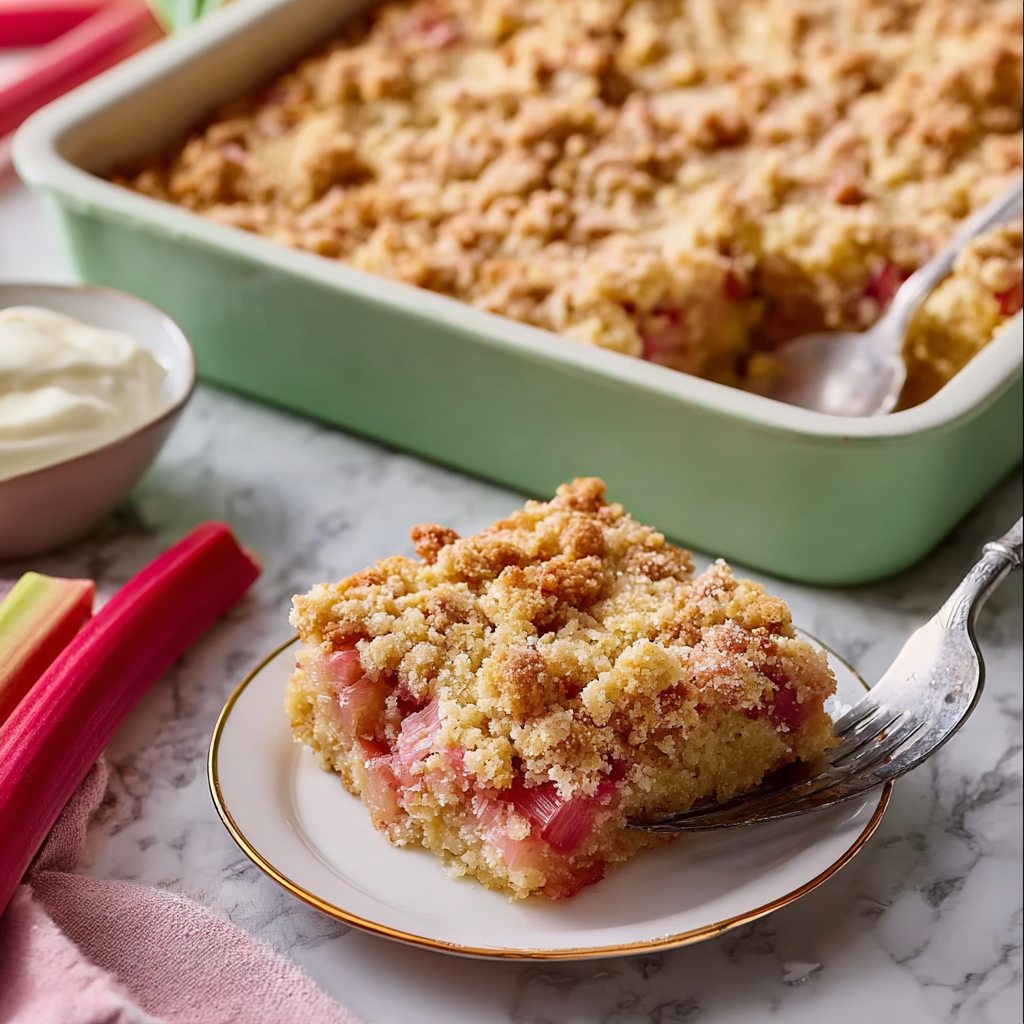
    Rhubarb is the most underrated thing you can put in a cake. It’s tart and fibrous and looks alarming when raw. Leo spent a full five minutes convinced I was putting celery in a dessert, but when it bakes into a buttery sponge with a generous layer of cinnamon sugar on top, something genuinely magical happens. The rhubarb softens into jammy pink pockets, the sugar crust crackles when you press a fork through it, and the whole thing smells like the best version of spring you have ever walked into. It keeps well, it travels well, and it turns into a genuinely excellent mid-morning snack if you hide a square before the kids find the tin.

    How To Make Rhubarb Cake Recipe

    After the sugarless catastrophe, I rebuilt the recipe completely from scratch. The second lesson learned in batch three was that rhubarb releases liquid when it bakes, and if you don’t compensate in the batter, you end up with a sunken, soggy middle. Leo called that one a pink swamp. Mia tried to rescue it with icing sugar, which was both unhelpful and extremely endearing. The fix is straightforward: toss the rhubarb in a spoonful of flour before folding it in. It absorbs the released moisture, holds the pieces in place, and gives you clean, distinct pockets of fruit in every single slice.

    Main Ingredients

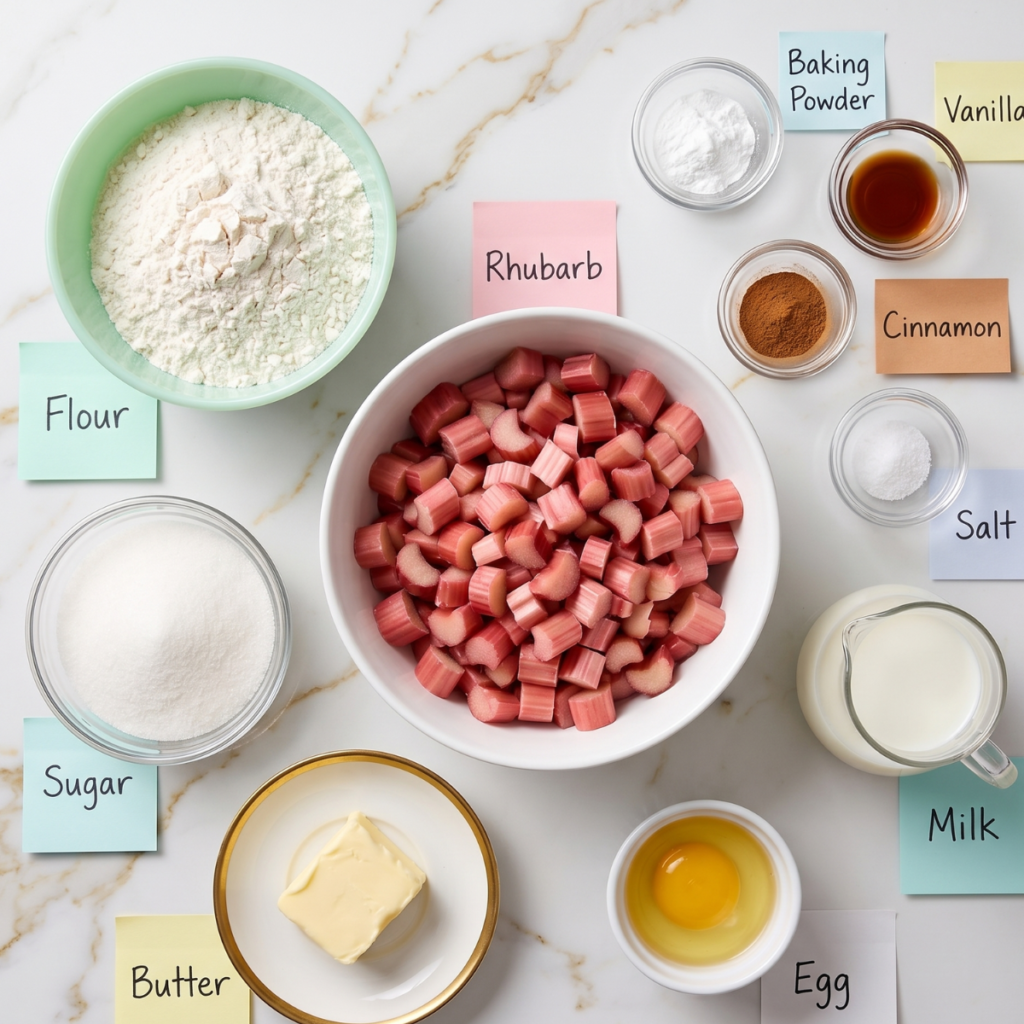
    • 2 cups fresh rhubarb, trimmed and chopped into 1cm pieces: the shorter the pieces, the better distributed through the cake; avoid anything thicker than your thumb
    • 1½ cups plain all-purpose flour, divided: 1 tbsp goes to coat the rhubarb; the rest goes into the batter
    • 1 cup granulated white sugar, divided: ¾ cup into the batter, ¼ cup mixed with cinnamon for the topping
    • ½ cup unsalted butter, softened room temperature is non-negotiable; cold butter will not cream properly
    • 1 large egg, room temperature: room-temp eggs incorporate more evenly than cold ones
    • ½ cup whole milk: full-fat gives the crumb its softness; lower-fat milks make it a little drier
    • 1½ tsp baking powder: the lift that keeps this from being dense; check it isn’t expired
    • 1 tsp pure vanilla extract: rounds out the tartness beautifully
    • ½ tsp ground cinnamon: for the topping; it pairs with rhubarb in a way that feels like it was always meant to happen
    • ¼ tsp fine salt: sharpens every other flavour in the batter; don’t skip it (ask me how I know)

    Step-by-Step Instructions

    Step 1: Prep the Rhubarb and Tin

    • Preheat oven to 175°C (350°F) and grease a 20cm (8-inch) square baking tin.
    • Wash, dry, and chop rhubarb into 1cm pieces uniform size means even baking.
    • Toss rhubarb with 1 tablespoon of flour in a small bowl until lightly coated; set aside.
    • Mix the remaining ¼ cup sugar with cinnamon in a separate small bowl for the topping.

    Step 2: Cream the Butter and Sugar

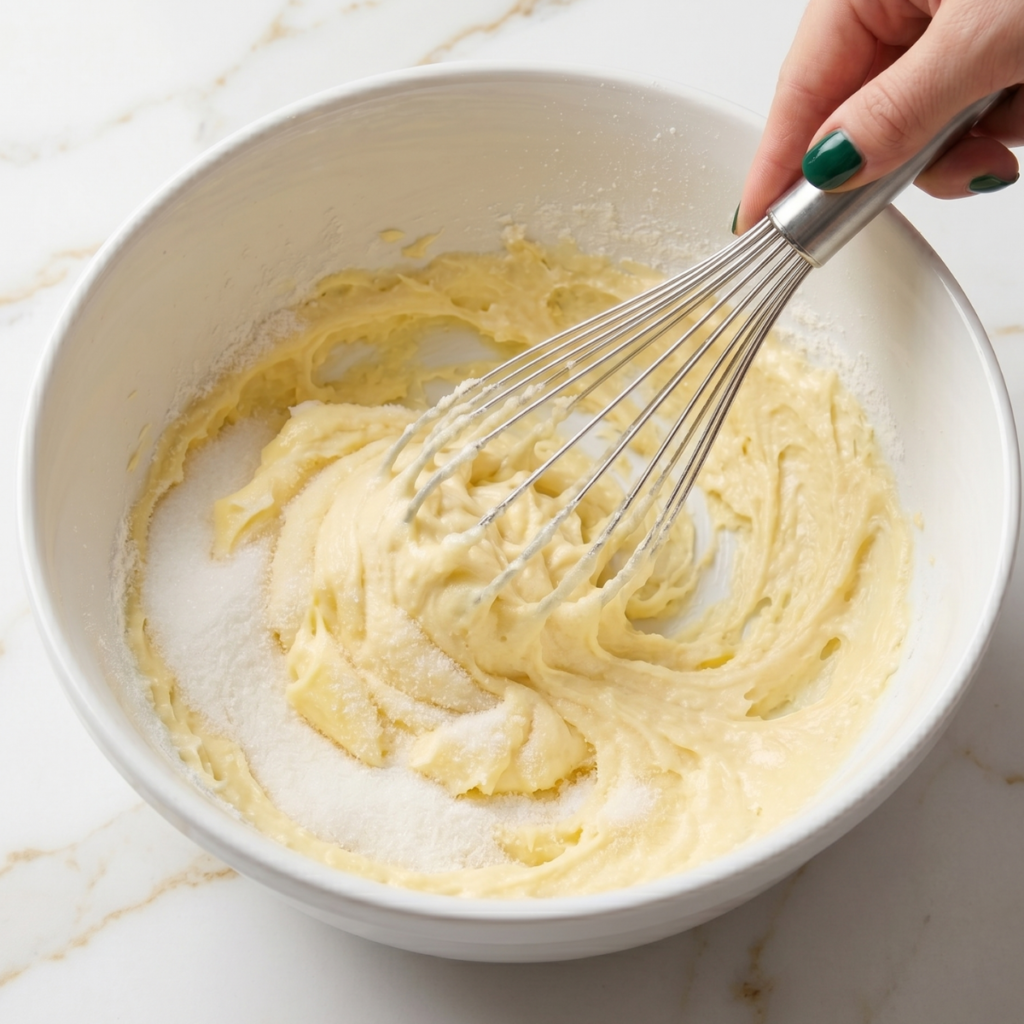
    • Beat softened butter and ¾ cup sugar together until pale and fluffy, about 3 minutes.
    • Add the egg and vanilla extract and beat again until fully combined and smooth.
    • Scrape down the sides of the bowl: there are always pockets of unmixed butter hiding at the bottom.
    • The mixture should look light and slightly increased in volume at this stage.

    Step 3: Fold in Flour and Rhubarb

    • Whisk together the remaining flour, baking powder, and salt in a separate bowl.
    • Add the flour mixture and milk to the butter mixture in alternating additions, starting and ending with flour.
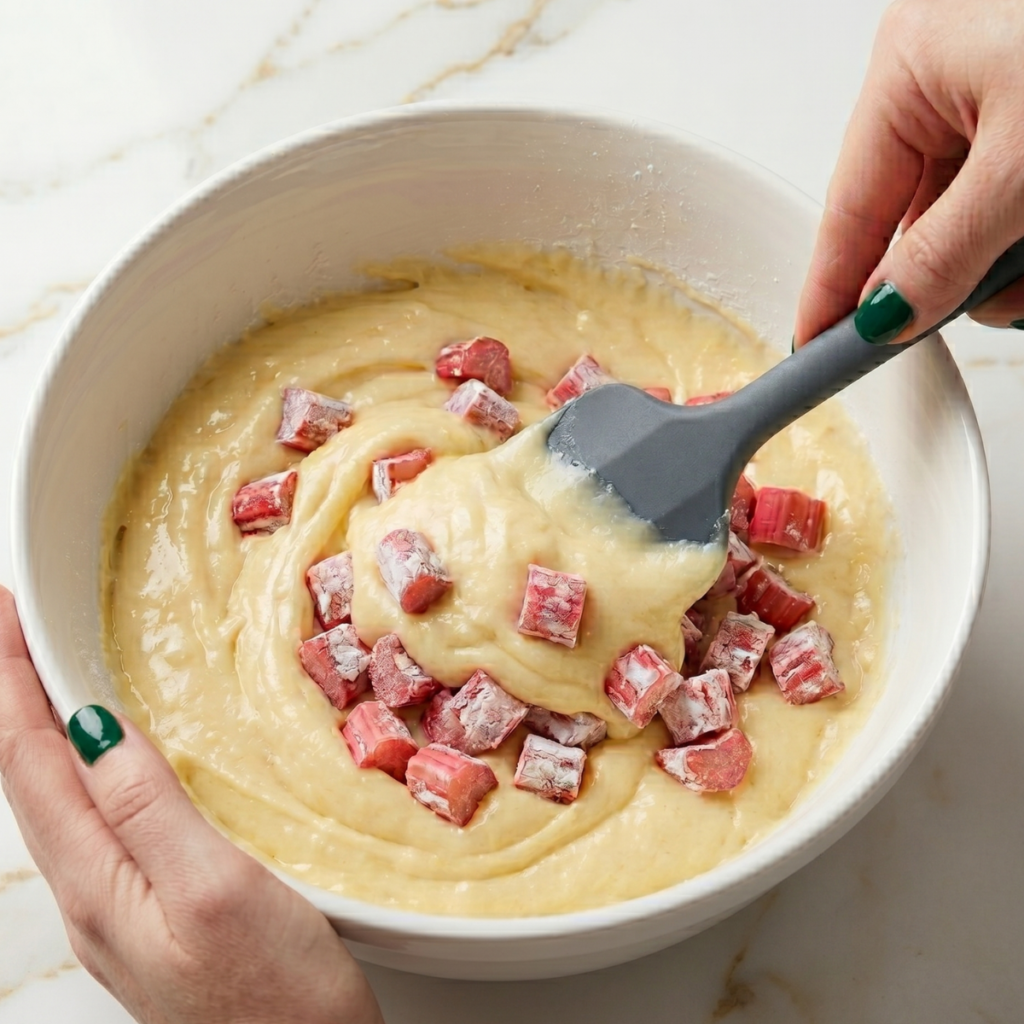
    • Fold the flour-coated rhubarb pieces through the batter gently until just distributed.
    • Do not overmix; a few small lumps in the batter are completely fine and expected.

    Step 4: Bake and Cool

    • Pour batter into the prepared tin and spread evenly with a spatula.
    • Scatter the cinnamon sugar mixture evenly over the entire surface of the batter.
    • Bake for 38 to 42 minutes until a skewer inserted in the center comes out clean.
    • Cool in the tin for 15 minutes before cutting into squares; it slices much more cleanly when slightly cooled.

    Rhubarb Cake Recipe Variations

    Rhubarb and Strawberry Spring Bake

    Replace half the rhubarb with fresh hulled strawberries, halved. Mia discovered this version entirely by accident when she added strawberries to the bowl while I was answering the door, and it became the best thing she has ever done in this kitchen. The strawberries soften into pools of jammy sweetness that balance the rhubarb’s tartness beautifully. Increase the bake time by 3 to 4 minutes since strawberries release more liquid.

    Leo’s Brown Butter Rhubarb Version

    Brown the butter in a saucepan over medium heat until it smells nutty and the milk solids turn golden, then cool it completely before creaming. Leo asked if we could “make it taste more interesting”; this was what I came back with. The brown butter adds a deep, almost caramel warmth underneath the tartness that makes the whole cake taste considerably more sophisticated than a simple spring bake has any right to.

    Rhubarb Crumble Cake

    Swap the cinnamon sugar topping for a simple crumble made from 4 tablespoons butter, 4 tablespoons flour, 3 tablespoons sugar, and a pinch of cinnamon rubbed together into coarse crumbs. Scatter generously before baking. The crumble bakes into a crunchy, buttery layer that makes this cake feel like a baked fruit dessert and a crumble had a very successful baby. Serve warm with a spoon of thick cream.

    Substitutions

    Fresh rhubarb → Frozen rhubarb, not thawed: Use straight from frozen; do not thaw first or it releases too much water. Toss in flour as directed and add 5 extra minutes to the bake time. The flavor is nearly identical to fresh.

    Whole milk → Soured milk or buttermilk: Add a teaspoon of white vinegar or lemon juice to regular milk and let it sit for 5 minutes. The slight acidity tenderizes the crumb and gives the cake a faint tang that actually complements the rhubarb wonderfully.

    Unsalted butter → Coconut oil: Use refined coconut oil in the same quantity, melted and cooled. The crumb is slightly denser but still delicious, and this makes the recipe dairy-free if you also swap the milk.

    Plain flour → Gluten-free 1:1 baking flour: A direct swap with no other changes needed. The texture is very slightly more crumbly but holds together well when cooled. Use the same tablespoon to coat the rhubarb.

    Equipment

    • 20cm (8-inch) square baking tin
    • Stand mixer or hand mixer
    • Two large mixing bowls
    • Small bowl for rhubarb prep and topping
    • Rubber spatula
    • Whisk
    • Skewer or toothpick for testing
    • Cooling rack

    Storage Tips

    Make Ahead

    • Chop and flour-coat rhubarb up to 1 day ahead; refrigerate covered.
    • Mix dry ingredients the night before and store in a sealed bowl.

    Room Temperature

    • Keeps well covered at room temperature for up to 2 days.
    • The cinnamon sugar topping softens slightly by day 2 but is still delicious.

    Refrigerator

    • Store in an airtight container for up to 5 days.
    • Bring to room temperature before serving for best texture.
    • A 10-second microwave warm brings it back to a fresh-baked feel.

    Freezing

    • Freeze individual squares wrapped in plastic then foil for up to 2 months.
    • Thaw at room temperature for 1 to 2 hours; do not microwave from frozen.

    Family Secret Worth Sharing

    The flour-coating trick for the rhubarb is the one thing I wish someone had told me at the very beginning. Raw rhubarb is about 94% water, and when it hits heat, all of that liquid has to go somewhere. Without anything to absorb it, it migrates to the bottom of the cake, and you end up with a wet, dense, collapsed middle, which is precisely what Leo called the pink swamp. A single tablespoon of flour tossed through the chopped pieces before they go into the batter is all it takes. The flour swells as the rhubarb releases moisture, holds the pieces in place, and keeps your crumb clean and even from edge to center. Mia now insists on doing the tossing herself every single time, with great ceremony, using her smallest bowl. It is completely unnecessary to use a separate bowl for this. I have never told her that.

    Troubleshooting FAQs

    Why did my rhubarb cake sink in the middle?
    Almost always one of three things: the rhubarb wasn’t coated in flour before going in (releasing too much liquid), the oven wasn’t fully preheated, or the cake was taken out too early. Test with a skewer right to the center; it should come out clean with no wet batter. If in doubt, give it another 3 to 5 minutes.

    My rhubarb is very thick and tough should I peel it?
    Yes, if the stalks are very mature and fibrous, run a vegetable peeler lightly along the outside. Young, thin rhubarb from early spring doesn’t need this at all. The stalks should be firm and slightly glossy; avoid anything that looks dried out or hollow at the cut end.

    Can I make this into a loaf instead of a square tin?
    Absolutely. Pour the batter into a greased 9×5 inch loaf tin and increase bake time to 50 to 55 minutes. Check at 50 minutes with a skewer. The loaf shape slices beautifully for lunchboxes and holds together slightly better for transport than squares do.

    Can I use frozen rhubarb from the shops?
    You can, and it works well. The key is to not thaw it first. Add it straight from frozen, already tossed in flour, and give the cake an extra 4 to 5 minutes in the oven. Thawed frozen rhubarb dumps too much water into the batter, and you end up back in pink swamp territory.

    Pink, Tart, and Already Gone by Teatime

    There is something about a rhubarb cake that feels specifically like spring decided to show up in your kitchen and make itself comfortable. The color, the smell, and the way the cinnamon sugar topping crackles when you press the first fork through it are some of those bakes that ask very little of you and give you back considerably more than you expected. Leo has stopped asking if I’m putting celery in the cake. Mia still insists on doing the flour toss. The tin rarely makes it to the next morning.

    If you’re building your collection of easy weeknight dinners and want a bake that earns the same level of reliability, this one belongs on that shortlist. For more sweet baking ideas that actually work, have a look through the dessert collection. And if you loved the honey glaze approach in our honey garlic shrimp, that same balance of sweet and sharp is exactly what makes this cake work too.

    Don’t forget to snap a picture of your rhubarb cake before those pink squares disappear off the cooling rack (trust me, it will disappear quickly!), and leave a rating below. We’d love to hear how this rhubarb cake recipe becomes part of your spring baking story.
  • 5 Secrets to the Creamiest Homemade Mango Ice Cream

    5 Secrets to the Creamiest Homemade Mango Ice Cream

    “Mom. This is just cold mango.” Leo handed his bowl back to me like a tiny restaurant critic returning a dish. Mia hadn’t even tried hers. I had spent forty minutes on what I was certain would be perfect Mango Ice Cream and produced something the children described, generously, as weird. Two more batches, one actual breakthrough, and now nobody hands bowls back anymore.

    Why This Recipe Is Special

    This mango ice cream is the kind of dessert that stops everyone mid-conversation. There are no eggs, no ice cream maker, and no complicated technique—just ripe mango, a handful of pantry staples, and a freezer doing all the heavy lifting while you go about your evening. For me, it’s the dessert I pull out when summer starts to drag and the kids are bored and sticky and need something genuinely exciting. It’s also the one Mia requests for every single birthday, which for a six-year-old is basically the highest honor a recipe can receive.

    How To Make Mango Ice Cream

    After the orange gravel incident, I went back to basics. The problem was obvious in hindsight. I’d been treating frozen mango like it would cooperate without being blended first. It does not. The second disaster involved not whipping the cream long enough, so the whole thing turned into a dense, icy slab that Leo described as “a mango brick.” He wasn’t wrong. The third attempt, Mia stood next to me on her step stool, and we blended everything carefully together. She narrated the whole process like a cooking show host. The ice cream came out silky, golden, and completely perfect. Leo declared it better than any shop-bought version. That is the only review that matters in this kitchen.

    Main Ingredients

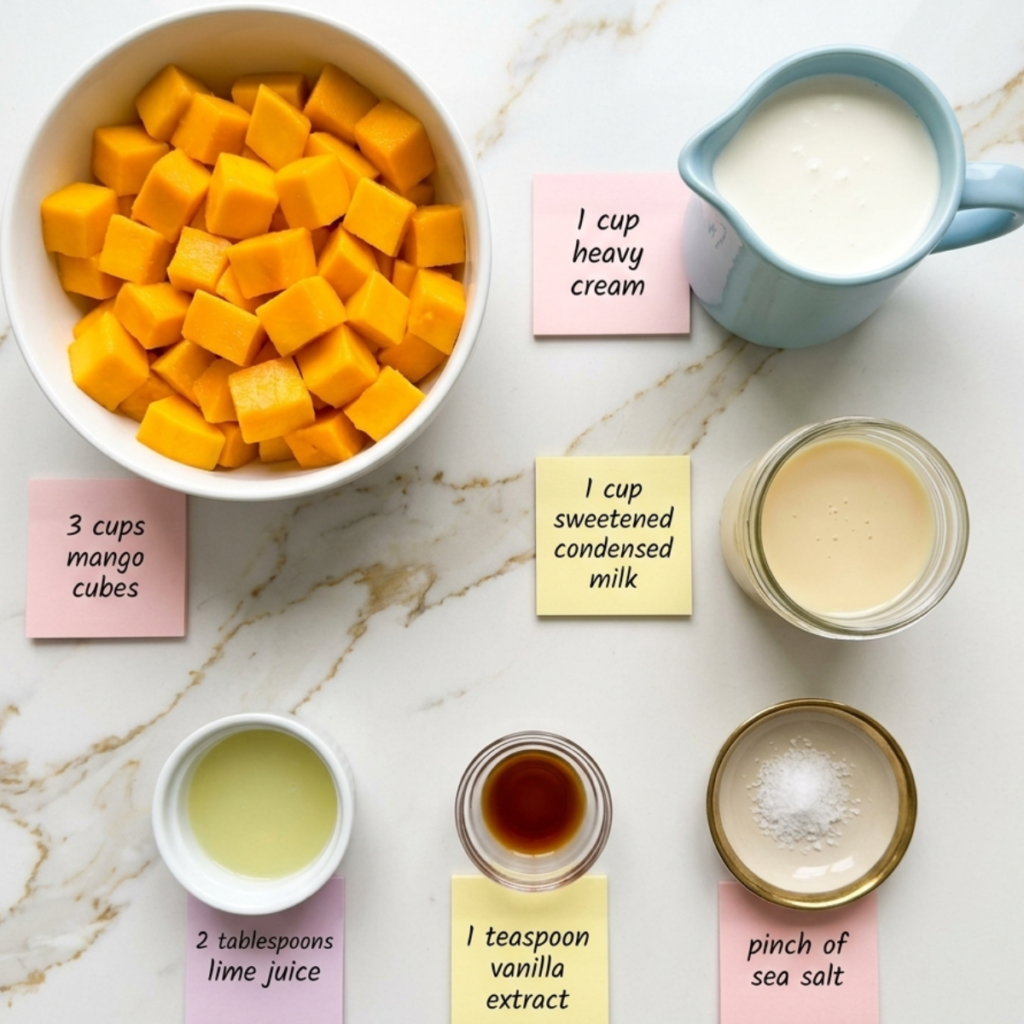
    • 3 cups ripe mango, peeled and cubed (about 2 large mangoes). Ripeness is everything; the sweeter the mango, the more intense the flavor. Alphonso or Ataulfo varieties are exceptional
    • 1 cup heavy whipping cream, very cold (cold cream whips faster and holds volume; chill your bowl too)
    • 1 cup sweetened condensed milk: sweetener and creaminess in one; keeps ice cream scoopable instead of icy
    • 2 tbsp fresh lime juice brightens the mango and stops it tasting flat Mia calls this the “secret sparkle.”
    • 1 tsp pure vanilla extract rounds out the tropical flavour without overpowering it
    • Pinch of salt makes all the sweetness pop; never skip salt in a dessert
    • Fresh mango chunks and mint for topping (optional) makes it look like a million dollars with zero extra effort

    Step-by-Step Instructions

    Step 1: Blend the Mango Base

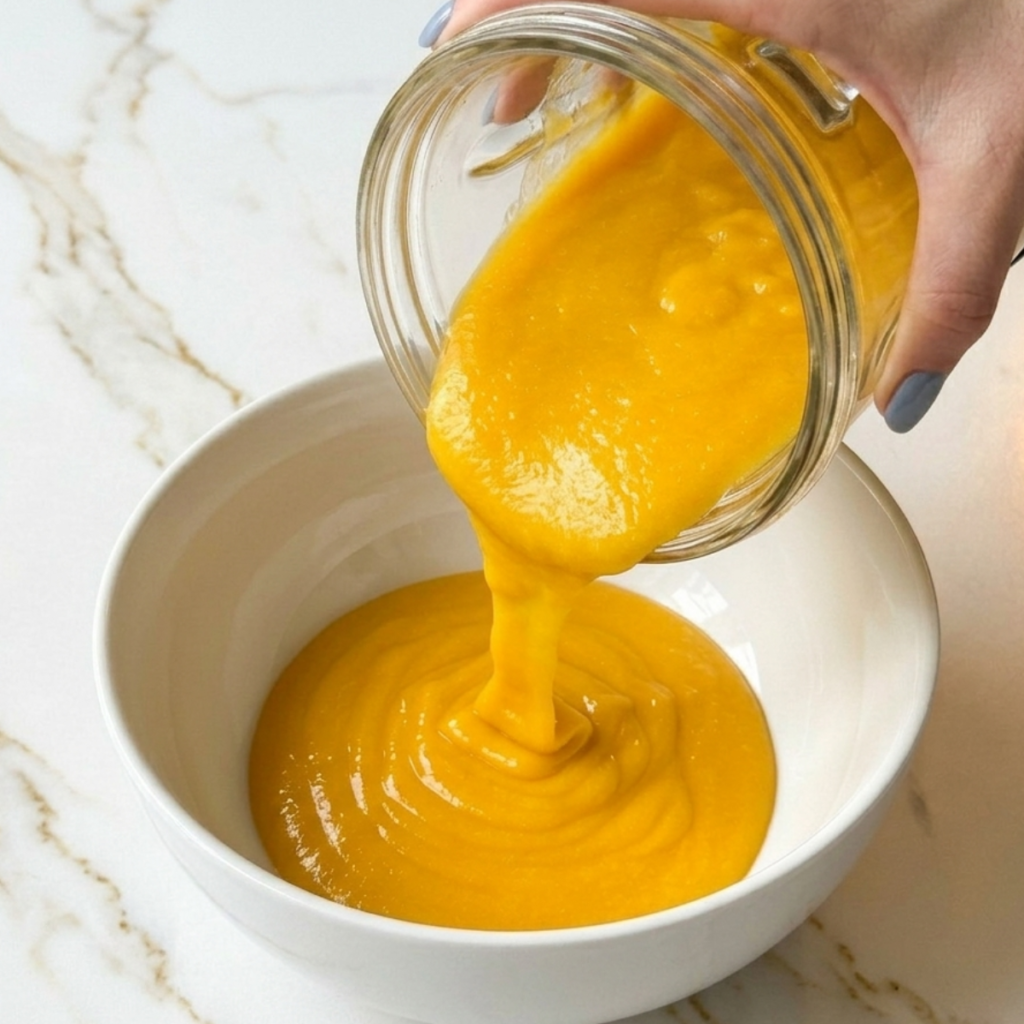
    • Add mango cubes, lime juice, vanilla, and salt to a blender or food processor.
    • Blend until completely smooth with absolutely no chunks remaining; this is the lesson I learned the hard way.
    • Taste the puree and adjust lime juice if needed; it should be bright and intensely fruity.
    • Pour into a bowl and set aside while you prepare the cream.

    Step 2: Whip the Cream to Soft Peaks

    • Pour very cold heavy cream into a large chilled bowl.
    • Beat with a hand mixer on medium-high until soft peaks form, about 3 to 4 minutes.
    • Soft peaks hold their shape, but the tip gently folds over—not stiff, not liquid.
    • Stop here; over-whipped cream turns grainy once frozen.

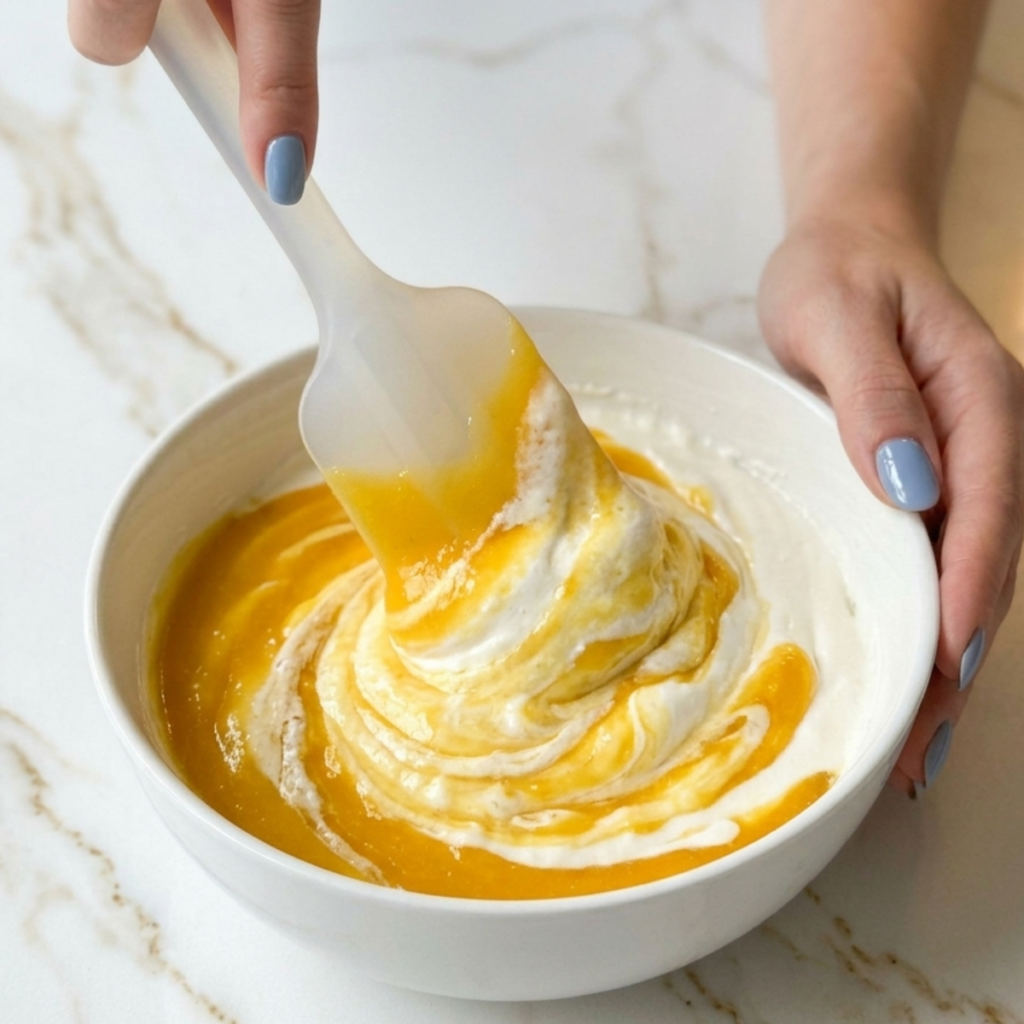
    Step 3: Fold Everything Together

    • Stir condensed milk into the mango puree until fully combined and uniform in color.
    • Add the mango mixture to the whipped cream in two additions, folding gently with a spatula.
    • Use a slow sweeping fold from the bottom up; do not stir, or you will deflate the cream.
    • Stop folding when the mixture is uniformly golden with no white streaks remaining.

    Step 4: Freeze and Serve

    • Pour into a freezer-safe container and smooth the top with a spatula.
    • Press plastic wrap directly onto the surface so it touches the ice cream with no air gaps.
    • Freeze for a minimum of 6 hours, or overnight for the cleanest scoops.
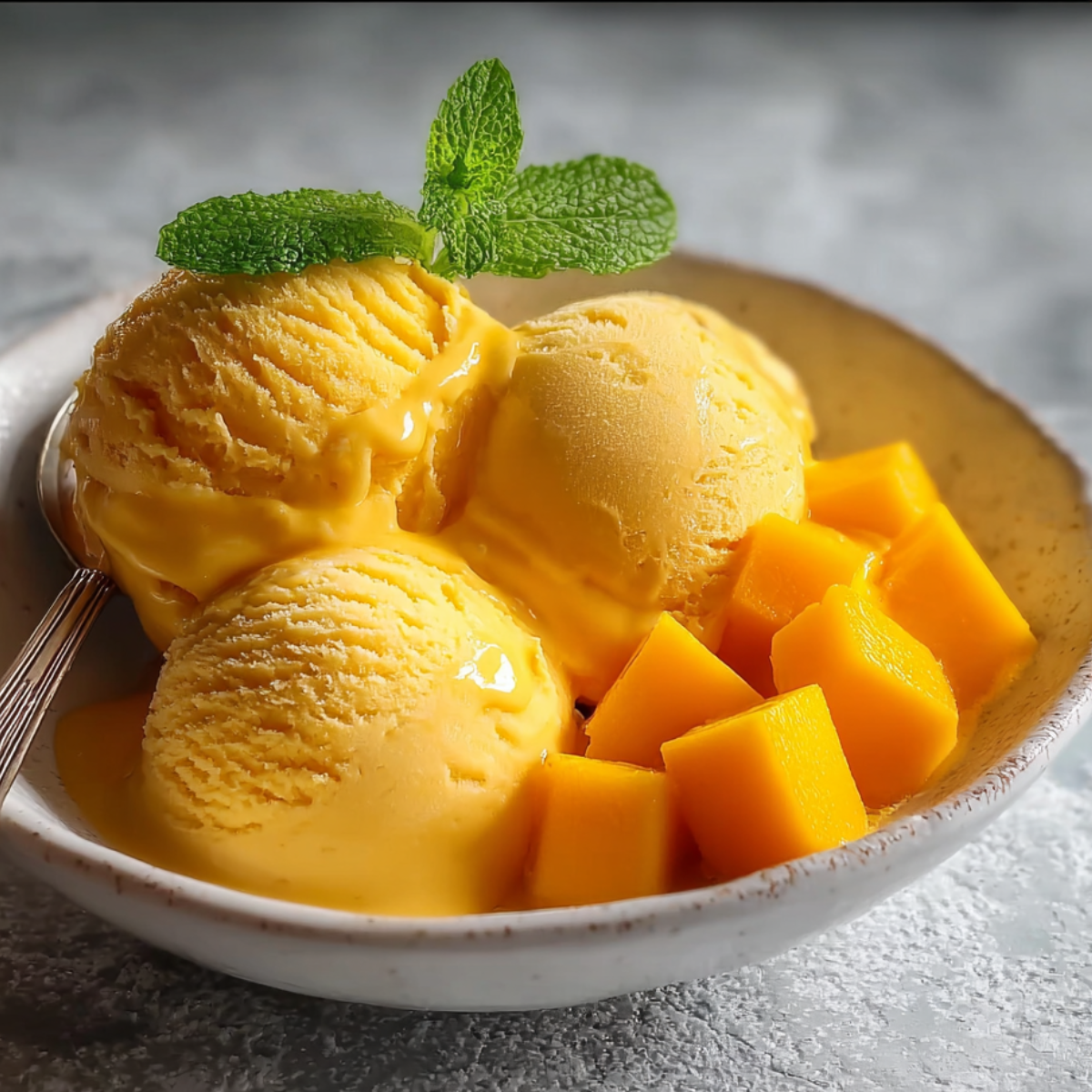
    • Remove from the freezer 5 minutes before serving; top with fresh mango and mint.

    Mango Ice Cream Variations

    Mango Coconut Sorbet-Style Swirl

    Replace half the heavy cream with full-fat coconut cream for a dairy-light version that leans deep into tropical territory. Mia says it “tastes like a holiday.” Swirl in toasted coconut flakes right before freezing for a little crunch that disappears between bites in the most satisfying way. This works beautifully as a sorbet recipe alternative for dairy-free guests too.

    Leo’s Chilli Mango Version

    Add a quarter teaspoon of Tajin or a tiny pinch of cayenne to the mango puree before blending. Leo suggested the idea entirely unprompted after eating mango with chili at a school fair. I was skeptical. I was wrong. The heat arrives right at the end of each bite, after all the cold sweetness, and it is genuinely wonderful. This one is for the adults and adventurous nine-year-olds who think they invented everything.

    Mango Ice Cream Sandwich Bars

    Pour the mixture into a parchment-lined square baking tin and freeze flat. Once solid, cut into rectangles and sandwich between two thin graham crackers or digestive biscuits. Wrap each one individually in plastic wrap and store in the freezer. I bring these to birthday parties and playdates, and every single parent asks for the recipe before they leave. Devastatingly easy and completely impressive.

    Substitutions

    Heavy cream → Full-fat coconut cream: Best dairy-free swap that keeps the ice cream scoopable and creamy rather than icy. Chill the can overnight and use only the solid cream at the top. Pairs brilliantly with mango.

    Condensed milk → Sweetened condensed coconut milk: Found in most health food stores; makes the whole recipe vegan with no other changes needed. Sweetness level is nearly identical.

    Fresh mango → Frozen mango chunks, fully thawed: Works just as well and is more economical year-round. Thaw completely, drain excess liquid, then blend as directed. Often picked at peak ripeness so the flavor is surprisingly excellent.

    Lime juice → Lemon juice or orange juice: Lemon works equally well. Orange juice gives a mellower sweet-tart note rather than a bright citrus. Use the same 2 tablespoons either way.

    Equipment

    • Blender or food processor
    • Large mixing bowl (chilled if possible)
    • Hand mixer or stand mixer
    • Rubber spatula
    • Freezer-safe loaf pan or container with lid (9×5 inch ideal)
    • Plastic wrap
    • Ice cream scoop for serving

    Storage Tips

    Make Ahead

    • Make the mango puree up to 2 days in advance and refrigerate covered.
    • Fold and freeze the day before for best next-day scoops.

    Freezer

    • Keeps beautifully for up to 3 weeks in a sealed container.
    • Keep plastic wrap pressed directly on the surface to prevent freezer burn.
    • Store away from strong-smelling foods.

    Scooping

    • Remove from the freezer 5 minutes before serving to soften slightly.
    • Dip the scoop in warm water between each ball for cleaner scoops.
    • Do not refreeze if the ice cream has fully melted.

    Toppings

    • Add fresh mango chunks and mint at serving time only never before freezing.
    • Toasted coconut flakes and a drizzle of honey store well in the pantry.

    Family Secret Worth Sharing

    The real secret to this recipe has nothing to do with the ingredients. It’s the plastic wrap trick, and I resisted it for an embarrassingly long time because it felt fussy and unnecessary. I was wrong. Ice crystals form on the surface of homemade ice cream when air hits it, and they turn even the creamiest mixture into something that feels more like a snow cone than a proper scoop. Press the wrap directly onto the mixture before the lid goes on, like, actually touching the surface, and those crystals never form. My mom never told me this trick. I found it scribbled in the margin of an old recipe card she gave me years ago, and it entirely changed everything. Mia now does it herself every single time, cautiously, like she’s tucking it in for the night. It is the most endearing thing I have ever seen in this kitchen.

    Troubleshooting FAQs

    Why did my mango ice cream turn out icy instead of creamy?
    Two likely culprits: the cream wasn’t whipped to proper soft peaks, or you skipped pressing plastic wrap directly on the surface before freezing. Both let air and ice crystals in. Also check that condensed milk was fully mixed into the mango puree before folding; unmixed pockets cause uneven freezing.

    Can I make the sorbet without a blender?
    You can if your mango is very ripe and soft. Mash it thoroughly with a fork until completely smooth, then press it through a fine mesh sieve to remove any fibers. It takes about ten extra minutes, but it works. A hand blender is even faster if you have one.

    My ice cream won’t scoop; it’s rock solid. What went wrong?
    Nothing went wrong; it just needs time. Leave it on the counter for 5 to 8 minutes before scooping. If your freezer runs very cold, give it a little longer. Running your scoop under warm water between each one also helps a lot.

    How do I know when the mango is ripe enough?
    A ripe mango gives slightly when pressed at the stem end, smells sweet and fragrant near the base, and has some give in its skin. If it smells like nothing, it will taste like nothing wait another day or two. Ripeness is not optional in this recipe.

    The Scoop That Started It All

    These days the mango ice cream is a whole event in our kitchen. Leo reads the recipe card out loud like he wrote it himself. Mia presses the plastic wrap onto the surface with the focused seriousness of someone defusing something. They both stand at the freezer door approximately every forty-five minutes asking if it’s ready. And when it finally comes out golden and cold and smelling like the best version of summer, they go completely quiet for about three spoonfuls. That silence is the most honest food review I will ever get.

    If you’re looking to grow your collection of easy weeknight dinners with something sweet the whole family will love, this mango ice cream earns its place. It’s one of those recipe dinner party tricks that looks far harder than it is. And any time you need a crowd-pleasing addition to your easy weeknight dinner spread, summer gatherings, birthday treats, or a Tuesday in May when everyone just needs something good—this is the one.

    Please remember to snap a picture of your mango ice cream before those golden scoops disappear into happy little mouths (trust me, they will disappear quickly!), and leave a rating below. We’d love to hear how this mango ice cream becomes part of your family’s summer story.

  • The Healthy Carrot Juice Recipe That Glows For You

    The Healthy Carrot Juice Recipe That Glows For You

    The first time I made healthy carrot juice, I put the lemon in without thinking about the rind. The whole rind. Jake took one sip, put the glass down with the careful energy of someone defusing a situation, and said, “Mum. That is extremely bitter.” Emma tasted it, nodded very seriously, and said, “It tastes like a cleaning product.” I fished the rind out, started over, and got it exactly right the second time.

    Why This Recipe Is Special

    I started making this drink after seeing a short video titled “drink your skincare” and deciding that was either the most sensible thing I had heard all week or complete nonsense. Three weeks later I am firmly in the sensible camp. Carrots are one of the most concentrated sources of beta-carotene you can put in a glas your body converts it to vitamin A, which is the exact compound that supports skin cell renewal, brightness, and that particular glow that makes people ask if you have been somewhere warm. Add ginger for the anti-inflammatory hit and lemon for the vitamin C, and you have a morning juice that actually does what it says. Without the rind. That part is important.

    How To Make Healthy Carrot Juice

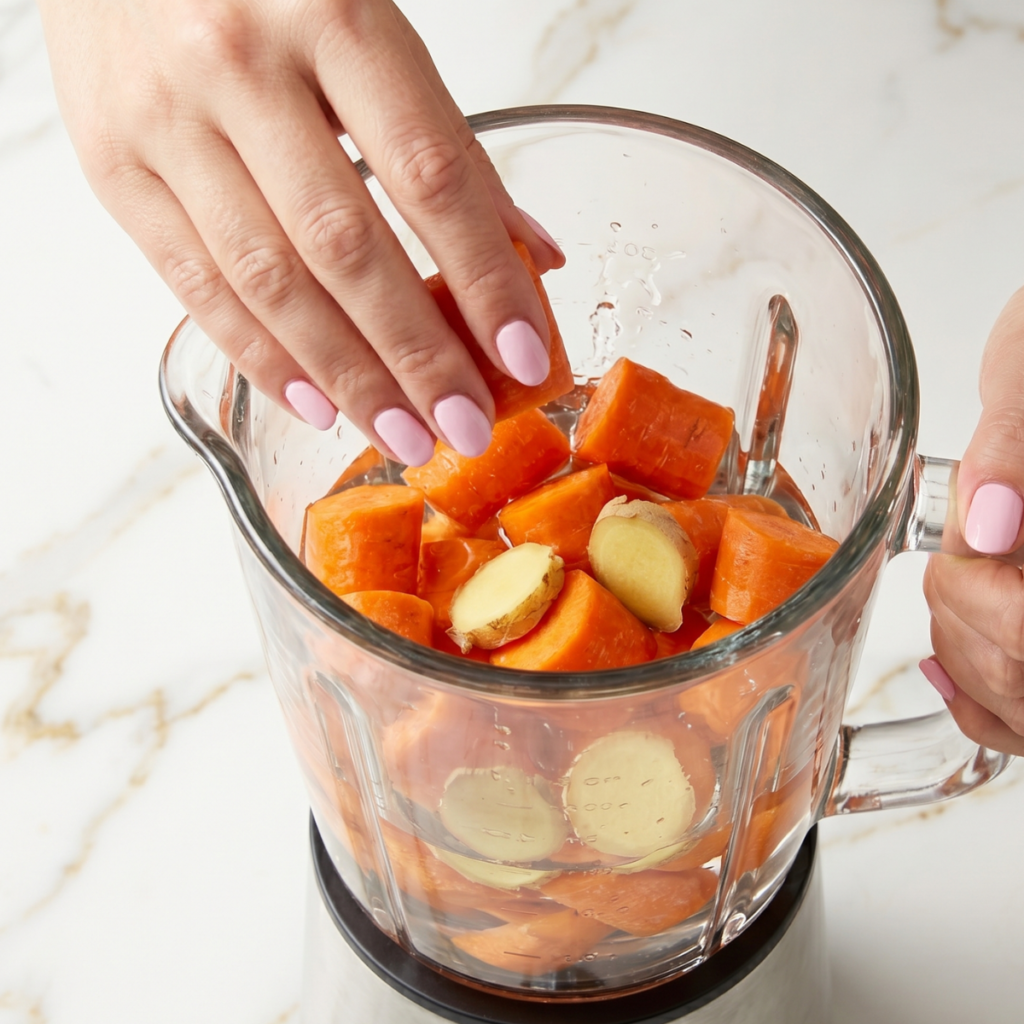
    After the bitter lemon incident, both kids positioned themselves at the counter for the second attempt with the careful interest of quality inspectors. Emma took charge of loading the blender, which she did with tremendous focus, placing each carrot piece in individually as though building something structural. Jake’s job was to hold the glass bottle ready for the finished juice, which he did also while eating a biscuit, which I did not comment on. When the final pour came out that deep, vivid orange and we all took a sip—warm from the ginger, bright from the lemon, and sweet from the carrots Jake said “that’s actually really good.” Emma wrote “successful” in the notes app on her tablet. I called that an excellent morning.

    Main Ingredients

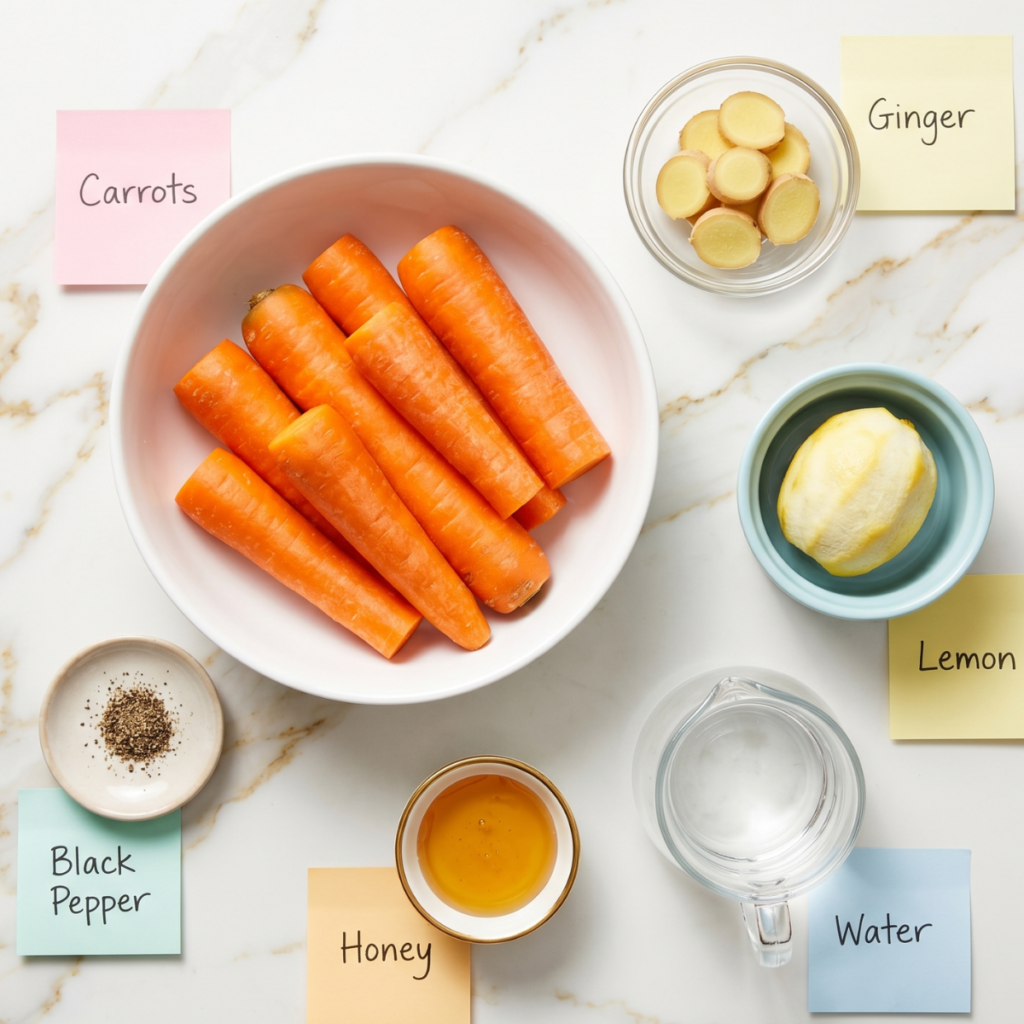
    • 6 medium carrots, washed and roughly chopped: The base and the star. No need to peel if organic; just scrub well.
    • 1.5 inch fresh ginger, unpeeled and roughly sliced: Anti-inflammatory and warming. Start with 1 inch if new to ginger heat.
    • Half a lemon, flesh only, rind completely removed: The vitamin C brightens the flavor. Flesh only, not the rind. Ask me how I know.
    • 1.5 cups cold filtered water: Add to the blender first. Add more for a thinner, more drinkable consistency.
    • 1 tsp raw honey (optional): A small touch of sweetness if the carrots are less sweet than usual.
    • Pinch of black pepper: Activates the anti-inflammatory compounds in the ginger. One pinch, you cannot taste it.
    • 3 to 4 ice cubes: For serving cold. Rounds the flavor beautifully.

    Step-by-Step Instructions

    Step 1: Prep Everything

    • Wash the carrots thoroughly and roughly chop into 1 to 1.5 inch chunks; no need to peel unless you prefer to.
    • Slice the ginger into rounds; no peeling is needed because the blender handles the skin.
    • Cut the lemon in half, peel the flesh from the rind of one half completely, and set the bare lemon flesh aside; this is the important step.
    • Have your glass, strainer, and storage bottle ready before you start blending.

    Step 2: Load and Blend

    • Add the cold water to the blender first; this ensures the blades catch everything immediately rather than spinning under dry carrots.
    • Add the carrot chunks, ginger rounds, and lemon flesh on top of the water.
    • Add the black pepper and honey if using.
    • Secure the lid firmly and blend on high for 60 to 90 seconds until completely smooth and an even deep orange throughout.

    Step 3: Strain

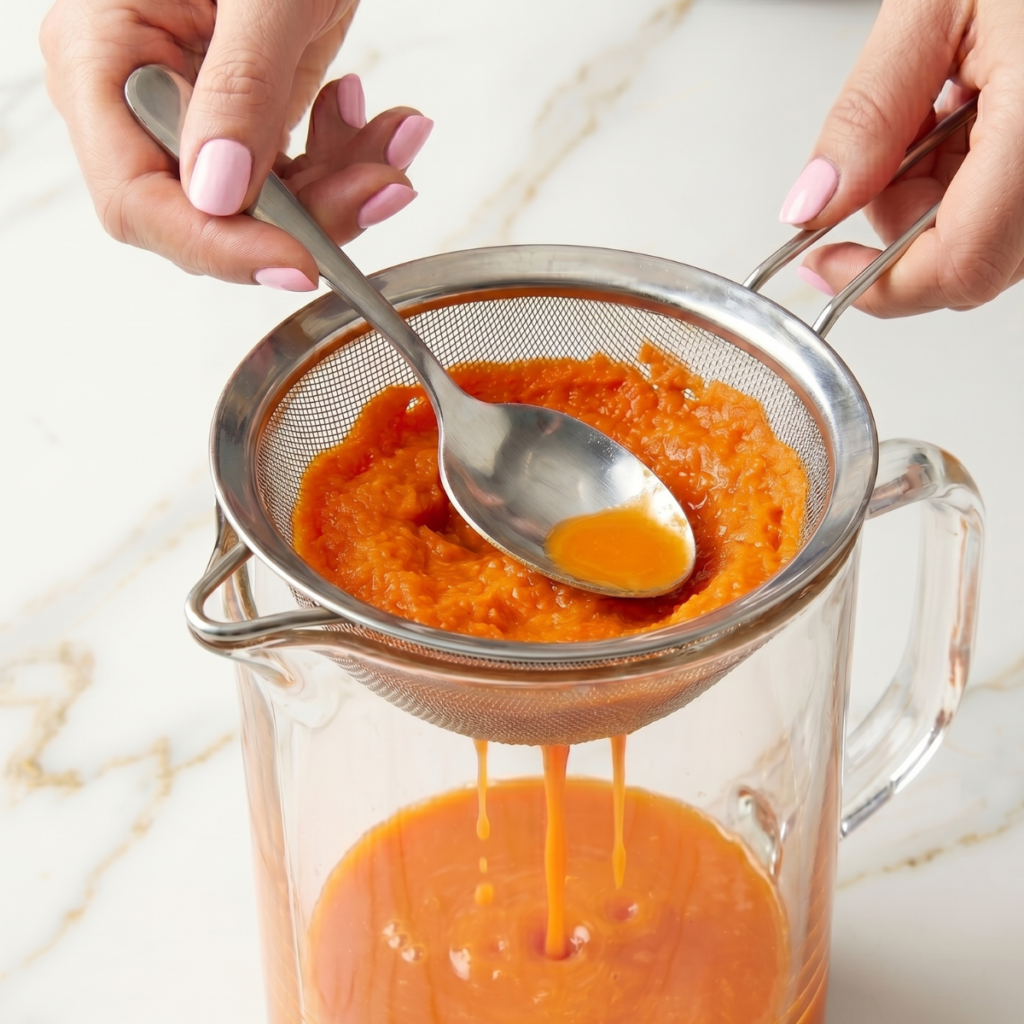
    • Pour the blended mixture through a fine mesh strainer or nut milk bag into a large jug press the pulp firmly with the back of a spoon to extract every drop.
    • Squeeze every last drop; the pulp left behind can go into muffins, soup, or the compost.
    • Taste and adjust more ginger for heat, more lemon for brightness, and a touch of honey for sweetness.
    • If the juice is thicker than you like, stir in an extra splash of cold water and strain once more.

    Step 4: Serve and Store

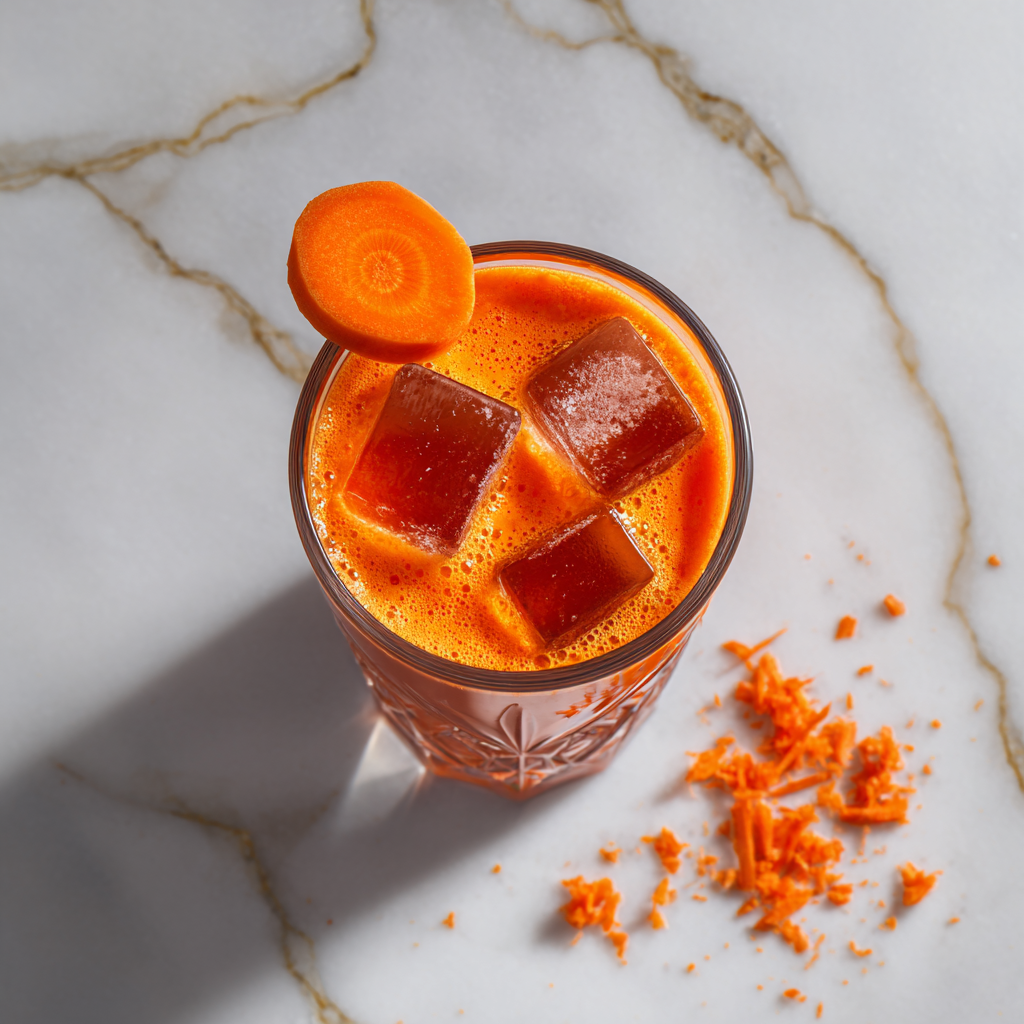
    • Pour immediately into a tall glass over ice for drinking now.
    • Pour the remainder into a clean glass bottle with a lid and refrigerate for up to 48 hours.
    • Give the bottle a shake before each serving, as natural separation will occur and is completely normal.
    • Drink first thing in the morning on an empty stomach for maximum beta-carotene absorption.

    Healthy Carrot Juice Variations

    Jake’s “Make It Less Healthy Tasting” Apple Version

    Jake’s contribution was straightforward: add an apple. He is not wrong. Add one cored and roughly chopped apple skin to the blender with everything else. It adds natural sweetness that softens the intensity of the ginger and makes the whole juice more approachable. This is the version I make when I want the kids to drink it without a lengthy negotiation. Jake considers it his recipe. I have let him have that.

    Emma’s “Full Skincare Routine in a Glass” Version

    Emma added turmeric after reading about it online with the focused energy she brings to all research projects. Add half a teaspoon of ground turmeric or a half-inch piece of fresh turmeric root to the base recipe before blending. The color shifts to a deeper golden-amber, and the anti-inflammatory properties increase significantly. Emma calls this her “morning routine in a glass.” She is not wrong. It is genuinely excellent.

    The Carrot Ginger Shot (The 30-Second Version)

    When I do not have time for a full glass but still want the hit, I make a concentrated shot. Half the carrots, the same ginger, the same lemon, and half the water. Blend and strain, and you get approximately two shot glasses of intensely concentrated carrot ginger juice. Down it in one, chase with water, and get on with the school run. One of those healthy juice shots that makes you feel genuinely virtuous in under three minutes, including cleanup.

    Substitutions

    • Fresh ginger → Half a teaspoon of ground ginger replaces a 1.5 inch piece. More concentrated so use sparingly. Fresh is always better, but ground absolutely works.
    • Filtered water → Coconut water adds electrolytes and gentle sweetness. The flavor becomes slightly more tropical and considerably more palatable for ginger beginners.
    • Lemon → Fresh orange juice squeezed in instead of lemon creates a sweeter, rounder flavor. Still provides vitamin C but without any of the sharpness. Converts people who say they do not like carrot juice.
    • Raw honey → One pitted Medjool date blended in with everything adds natural sweetness and a small amount of fiber with no refined sugar. You genuinely cannot tell it is there.

    Equipment

    • High-speed blender (Kambrook or similar)
    • Sharp knife and cutting board
    • Fine mesh strainer or nut milk bag
    • Large jug or bowl for straining
    • Glass storage bottle with lid
    • Tall glass for serving
    • Citrus peeler or knife (for removing lemon rind)
    • Measuring cup

    Storage Tips

    Make Ahead

    • Chop and bag all ingredients the night before and refrigerate; morning prep is under 2 minutes.
    • The full juice can be blended, strained, and stored in the glass bottle for up to 48 hours.
    • Make a double batch on Sunday evening and have juice ready for Monday through Wednesday mornings.

    Refrigerator

    • Store strained juice in an airtight glass bottle for up to 48 hours glass keeps it fresher than plastic.
    • Natural separation will happen; shake or stir before drinking.
    • For best results and maximum nutrient retention, drink within 24 hours.

    Freezing

    • Freeze in ice cube trays and transfer to a zip-lock bag keeps for up to 2 months.
    • Add frozen cubes directly to smoothies or defrost overnight in the fridge.
    • Frozen carrot juice cubes are excellent added to morning oats or overnight oats.

    Reheating

    • This juice is always served cold; do not heat it.
    • If the refrigerated juice is too cold, let it sit at room temperature for five minutes.
    • In winter, some people enjoy the beverage at room temperature; the ginger comes through more warmly that way.

    Family Secret Worth Sharing

    The thing that changed this juice from something I occasionally remembered to make into something I genuinely look forward to every morning was the glass bottle. It sounds too small to matter, but it is not. When I was making the juice in random leftover containers, it felt like a chore. The day I bought a proper tall glass bottle with a flip-top lid exactly like the one in the video and started keeping a full batch in the fridge at eye level, everything shifted.

    It became something. Something I could see. Emma started calling it “the glow bottle,” and Jake started asking if there was any left before school without being prompted. The juice did not change. The bottle changed. And somehow that made the habit stick in a way that three weeks of earnest intentions had not. Get the bottle. It is a four-pound thing from a kitchen shop, and it is the reason I have drunk this most mornings for two months straight.

    Troubleshooting FAQs

    The juice tastes too bitter. What went wrong?
    Almost certainly the lemon rind went in. This is the most common mistake. Use the flesh of the lemon; only peel it entirely before adding. If the batch is already made and too bitter, add another carrot, blend again, and strain it dilutes the bitterness significantly.

    My juice is too thick even after straining. How do I thin it out?
    Add more water before blending start with an extra half cup. A nut milk bag rather than a metal strainer gives a cleaner, thinner result. A second pass through the strainer also helps considerably.

    The ginger is too overpowering. Can I reduce it?
    Start with half an inch rather than one and a half and work up gradually. Adding the apple variation also softens the ginger noticeably without removing it entirely.

    How long before I see skin results from drinking this daily?
    Most people notice improved skin brightness within two to three weeks of drinking this consistently five or more mornings a week. Beta-carotene works cumulatively on skin cell turnover, so results build over time. The energy boost from ginger tends to be noticeable within the first few days.

    The Juice That Made My Kid Ask If I Got More Sleep

    The morning I noticed the difference in my skin was an ordinary Tuesday. No dramatic moment. Just Jake looking at me across the breakfast table and saying, “You look different. Did you get more sleep?” I had not gotten more sleep. I had drunk carrot juice most mornings for three weeks, and apparently it had done something. I told him what it was. He drank the rest of his glass without saying anything else, which is the highest possible endorsement from a nine-year-old.

    This is the kind of morning juice recipe that earns its place because it is simple enough to actually make, good enough to actually drink, and effective enough to actually notice. If you have been looking for one of those smoothie recipes for beginners that does not require eighteen ingredients, this is it. One glass. Most mornings. That is genuinely all it takes.

    Whether you make this your new skincare shots ritual, your way to start mornings feeling intentional, or just because that deep orange color filling a glass bottle looks extraordinarily good on a kitchen counter, start this week. The glow bottle approach is optional but highly recommended.

    Please remember to snap a picture of your healthy carrot juice before that gorgeous orange color disappears from the glass (trust me, it will disappear quickly!), and leave a rating below. We’d love to hear how this healthy carrot juice recipe becomes part of your morning glow story.

    Star rate this recipe and join our cozy healthy drinks family.

  • 8-Ingredient Glowing Beet Juice Recipe for your Skin

    8-Ingredient Glowing Beet Juice Recipe for your Skin

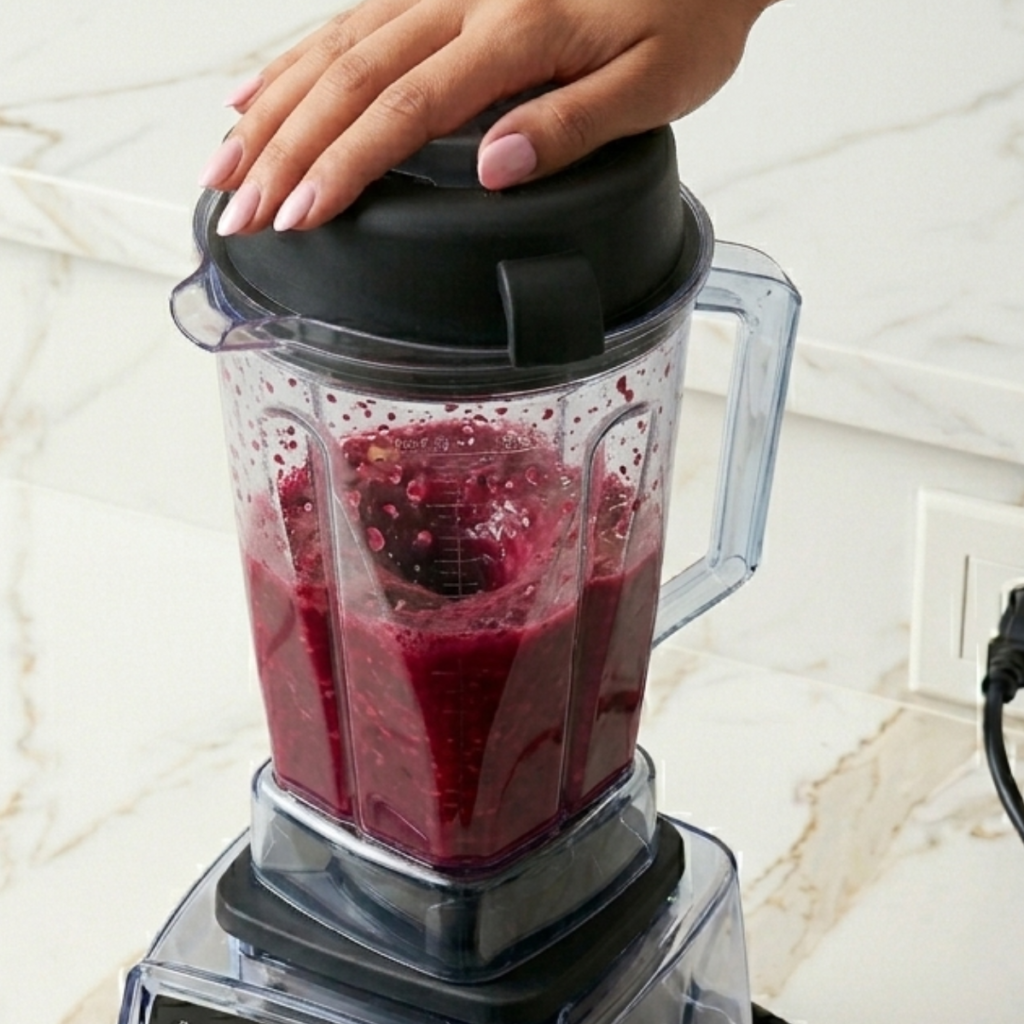
    The first time I made beet juice, I blended the raw beet without securing the lid. One confident pulse and magenta went absolutely everywhere: the ceiling, the backsplash, my white shirt, and the back of Jake’s neck. He turned around very slowly. Emma said, “It looks like a crime scene, Mum.” She was not wrong. We wiped everything down and started again with the lid firmly pressed on.

    Why This Recipe Is Special

    I started making this after a period when my skin was dull, tired-looking, and doing exactly what skin does when you have been surviving on school-run coffee and not enough sleep. A friend told me about beet juice for skin, and I was deeply skeptical. Three weeks of drinking this most mornings, and my skin looked genuinely, noticeably different, brighter, clearer, and more awake than I felt. The combination of raw beet, coconut water, lemon, and ginger hits the antioxidant, hydration, and anti-inflammatory notes all at once. It is one of those healthy drink recipes that earns its place in your actual routine rather than your aspirational one.

    How To Make Beet Juice for Glowing Skin

    After the ceiling incident, I made this with both kids watching from a safe distance. Emma had appointed herself quality control; her job was to assess the color, which she took to mean photographing every stage on her tablet with the focused energy of a documentary filmmaker. Jake tried it first, pulled a face that suggested he expected it to be terrible, then went quiet for a moment and said “actually that’s not bad.” From a nine-year-old who considers anything that is not beige a suspicious food choice, I will take “not bad” as the highest possible endorsement.

    Main Ingredients

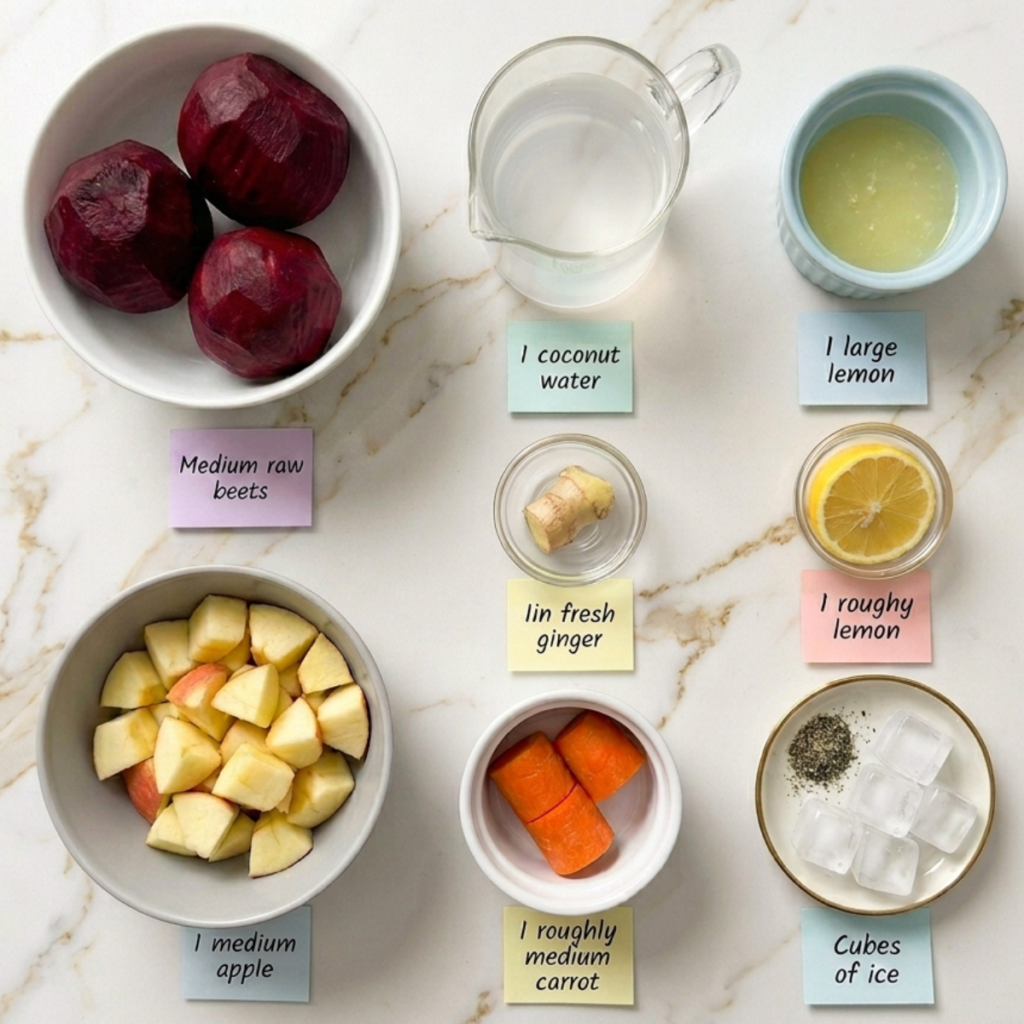
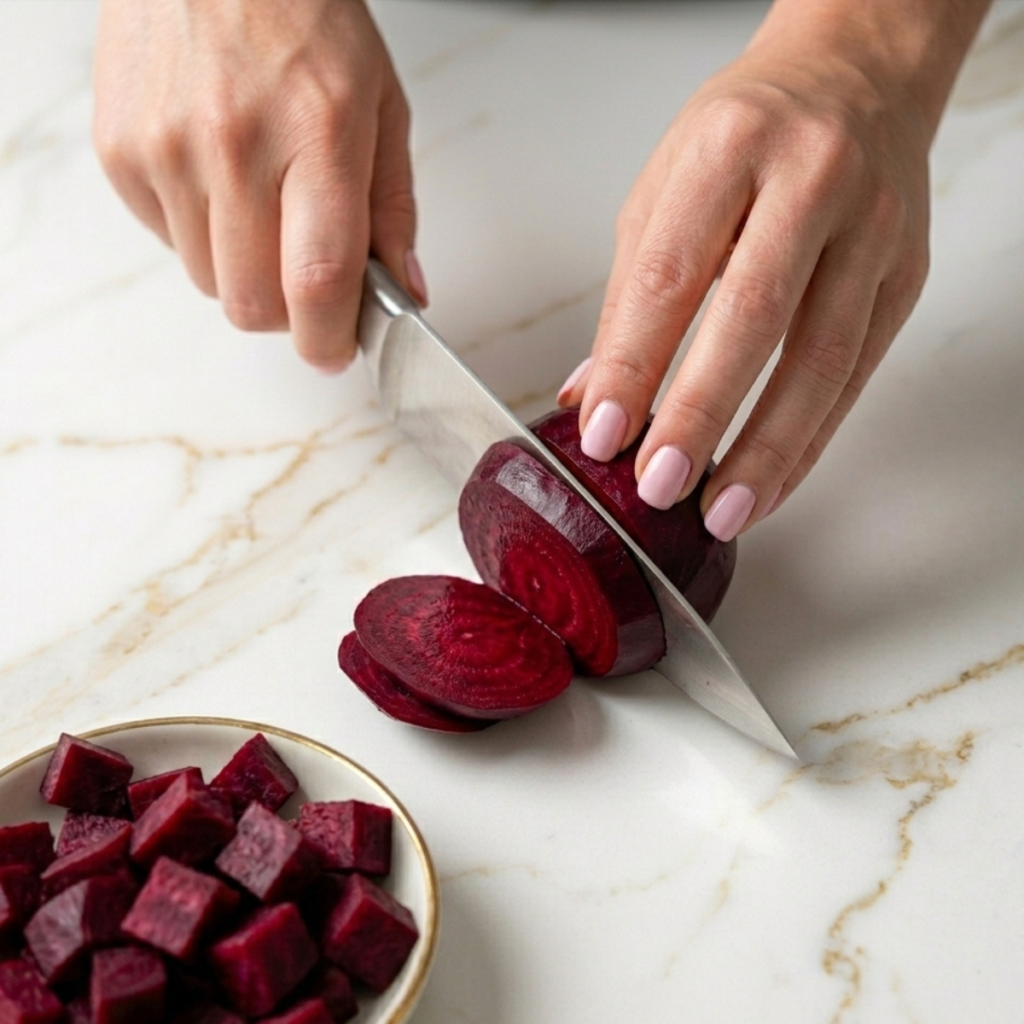
    • 2 medium raw beets, peeled and roughly chopped: The foundation of the recipe. Raw beets have more nutrients than cooked; wear gloves when peeling.
    • 1 cup coconut water: Natural electrolytes and sweetness without added sugar. The best liquid base for this juice is water.
    • Juice of 1 large lemon: Brightens the flavor and adds vitamin C, which helps the body absorb the iron in the beets.
    • 1 inch fresh ginger, peeled: Anti-inflammatory and warming. Start with half an inch if you are sensitive to ginger heat.
    • 1 medium apple, cored and chopped Natural sweetness that balances the earthy beet. Use green apples for lower sugar content.
    • 1 small carrot, roughly chopped: Adds beta-carotene for skin health and natural sweetness. Optional but worth including.
    • Pinch of black pepper: Activates the anti-inflammatory properties of the ginger. Tiny amount and you will not taste it.
    • 4 to 6 ice cubes: For serving cold and slightly diluted. Makes the flavor rounder and more drinkable.

    Step-by-Step Instructions

    Step 1: Prepare the Produce

    • Peel the beets with a vegetable peeler wear kitchen gloves or dedicate yourself to having pink fingers for the rest of the day.
    • Roughly chop the beets, apple, and carrot into pieces small enough for your blender to handle, about 1 to 1.5 inch chunks.
    • Peel the ginger and either grate it or add it as a chunk directly; the blender will handle it either way.
    • Juice the lemon and set it aside with the coconut water. Having everything ready before you start means the lid goes on and stays on.

    Step 2: Blend

    • Add the coconut water to the blender first. Adding the liquid first means the blades catch and process everything more smoothly.
    • Add the chopped beet, apple, carrot, and ginger on top of the liquid.
    • Secure the lid firmly; press down on it with one hand while blending, especially for the first pulse, and blend on high for 60 to 90 seconds until completely smooth.
    • Add the lemon juice, black pepper, and ice cubes, then blend for another 20 seconds to combine and chill.

    Step 3: Strain or Serve Whole

    • For a smooth juice: pour it through a fine-mesh strainer or nut milk bag, pressing or squeezing to extract all the liquid—discard the pulp or add it to a smoothie tomorrow.
    • For a whole-blended version with all the fiber: skip the straining entirely and drink it as a thick, nutrient-dense smoothie.
    • Taste before serving and adjust more lemon for brightness, more ginger for heat, and a teaspoon of honey if you want a touch more sweetness.
    • Pour over additional ice and serve immediately for maximum flavor and nutrient retention.

    Step 4: Clean Up Before the Beet Stains

    • Rinse every surface the beet touched immediately; beet juice stains quickly and becomes extremely persistent if it dries.
    • Rinse the blender with cold water first, then wash it with hot soapy water. Hot water first can set beet color into the plastic.
    • Wipe the counters immediately with a damp cloth; beet stains on grout or marble need cold water and speed, not scrubbing later.
    • Accept that there will probably be a small pink mark somewhere and call it character; this experience is a rite of passage with beet juice, and it happens to everyone at least once.

    Beet Juice Variations

    The Lemon Coconut Glow Boost (My Morning Ritual Version)

    This recipe is the version I make on the mornings when I actually want to feel like I have my life together. Double the lemon, use coconut water as the full base, add a tablespoon of coconut cream for richness, and skip the apple for a version that is less sweet and more sharp and clean. The lemon coconut combination cuts through the earthiness of the beet in a way that makes the whole drink feel refreshing rather than medicinal. It is also the most beautiful color, a deep magenta that Emma insists looks like a luxury spa drink, which frankly makes it taste better.

    Jake’s “Make It More Normal” Apple and Ginger Version

    Jake’s negotiated version has double the apple, half the beet, and extra ginger, his theory being that if it tastes more like apple juice, it basically is apple juice and therefore cannot be considered a health drink. He is wrong about the logic but right about the result. This version is sweeter, more familiar, and significantly easier to get into the habit of drinking every morning, which makes it the best entry point for anyone who is new to juicing recipes and not yet sure about the beet situation.

    Emma’s Skin Detox Boost (The Full Project Version)

    Emma researched this one with the thoroughness of someone preparing a school presentation, which she was. Add a quarter of a cucumber, a small handful of spinach, a teaspoon of turmeric, and a tablespoon of aloe vera juice to the base recipe. It turns a remarkable shade of deep red-green, and the skin detox benefits from the combination of beet, cucumber, spinach, and turmeric are genuinely substantial. Emma presented this version to me with a printed ingredient list and a citation from a wellness website. I added it to the rotation immediately and told her she was right, which is the only currency that matters.

    Substitutions

    • Coconut water → Cold filtered water works perfectly well and keeps the flavor clean and earthy. Cucumber water adds extra skin hydration. Chilled green tea adds antioxidants and a subtle herbal note that works beautifully with the ginger.
    • Fresh ginger → If fresh ginger is unavailable, half a teaspoon of ground ginger is a reliable substitute. Use it sparingly, as ground ginger is more concentrated. A quarter teaspoon of ground turmeric can be added alongside for extra anti-inflammatory benefit.
    • Apple → Pear gives a gentler, more floral sweetness and is slightly lower in sugar. A small handful of seedless red grapes adds sweetness and extra antioxidants. For a lower-sugar version, omit the apple entirely and add an extra inch of cucumber.
    • Fresh lemon juice → Fresh orange juice adds sweetness alongside the vitamin C and creates a warmer, rounder flavor. Lime juice gives a more tropical, sharper result that pairs particularly well with the coconut water. Bottled lemon works in a pinch, but fresh tastes noticeably better.

    Equipment

    • High-speed blender
    • Vegetable peeler
    • Sharp knife and cutting board
    • Fine mesh strainer or nut milk bag
    • Large jug or bowl for straining
    • Citrus juicer
    • Kitchen gloves (beet stains strongly recommended)
    • Tall glasses for serving

    Storage Tips

    Make Ahead

    • Pre-chop and bag the beets, apple, carrot, and ginger the night before, and refrigerate; this makes morning prep only 90 seconds.
    • The whole recipe can be blended ahead and refrigerated in a sealed jar for up to 24 hours.
    • Shake or stir before drinking; natural separation is normal and not a sign anything has gone wrong.

    Refrigerator

    • Store strained juice in an airtight glass jar for up to 48 hours, as glass preserves freshness better than plastic.
    • The color will deepen slightly overnight, which is normal; the flavor mellows, and some find it even better on day two.
    • Do not store the unstrained blended version for more than 24 hours, as the fiber begins to ferment.

    Freezing

    • Freeze the strained juice in ice cube trays; one cube per use makes it easy to add to smoothies or defrost single servings.
    • Frozen beet juice cubes keep for up to 2 months with minimal nutrient loss.
    • Defrost overnight in the fridge or blend from frozen into a chilled smoothie directly.

    Reheating

    • This juice is always served cold; do not heat it, as heat degrades the antioxidants and changes the flavor significantly.
    • If your refrigerated juice is too cold, let it sit at room temperature for 5 minutes rather than warming it.
    • Add a few fresh ice cubes when serving from the fridge to refresh the texture and chill it evenly.

    Family Secret Worth Sharing

    The single thing that changed my skin results from this juice was consistency, not quantity. I spent the first two weeks drinking a large glass every morning and seeing not much. Then I got busy, dropped to a small glass four or five times a week, and paradoxically started noticing the difference more, probably because my body had finally had enough time for the cumulative antioxidant and anti-inflammatory effect to actually show up.

    The other thing nobody tells you: the black pepper is essential. It sounds like a strange thing to add to a juice, and I skipped it for weeks. The compound in ginger that fights inflammation is significantly better absorbed when black pepper is present. One small pinch, and you cannot taste it; you genuinely cannot, and the juice does more of what you are drinking it for. I told Emma this. She wrote it down. She now adds it with the earnest precision of someone conducting a clinical trial. I find it very endearing.

    Troubleshooting FAQs

    The juice tastes too earthy, and I cannot get past it. What can I do?
    Start with one small beet rather than two and double the apple. The earthiness of raw beet is real and an acquired taste for many people; there is no shame in easing in gradually. Adding more lemon also cuts through the earthy notes significantly. Over two or three weeks most people find the taste shifts from challenging to something they actually look forward to.

    My blender is not powerful enough to blend raw beets smoothly. Any tips?
    Cut the beet into much smaller pieces, about half an inch, and add extra liquid before blending. Let the blender run for longer, pausing to scrape down the sides if needed. Alternatively, lightly steam the beet for 5 minutes first to soften it without fully cooking it; this method makes it much easier to blend and only marginally reduces the nutrient content.

    I do not have a juicer. Can I still make juice?
    A blender and a fine mesh strainer are all you need; no juicer is required. Blend everything with the liquid, pour through the strainer into a large bowl, and press the pulp firmly with the back of a spoon to extract every drop. A clean tea towel or nut milk bag works even better for squeezing. The result is just as good as a dedicated juicer and significantly easier to clean.

    How long before I see skin results from drinking beet juice?
    Most people notice a difference in skin brightness and hydration within two to three weeks of drinking beet juice consistently four to five times a week. Think of it as a long-term addition to your routine rather than an overnight fix, though the energy boost is noticeable much faster, usually within the first few days.

    The Morning That Made the Pink Ceiling Worth Every Bit

    Three weeks into making this drink every morning, I was at school pickup when another mom stopped me and said, “Your skin looks amazing; what are you using?” I almost told her I had bought something new. Then I told her about the beet juice, and she looked at me exactly the way you might expect. But I sent her the recipe anyway. She messaged me two weeks later saying she was converted and had also ruined a tea towel.

    This is the kind of healthy drink recipe that feels like a small act of care for yourself on a weekday morning. Not a grand gesture. Just five minutes, a blender with the lid on, and something that tastes genuinely good while doing something genuinely good. Emma drinks hers with the satisfaction of someone who did the research. Jake drinks his and pretends it is apple juice. I drink mine and feel like I got the morning right.

    Whether you make this your new skin detox ritual, your way to boost energy naturally before the school run, or just because you want to see what the fuss about juicing recipes is, start today. Keep the lid on. And maybe wear an apron the first time.

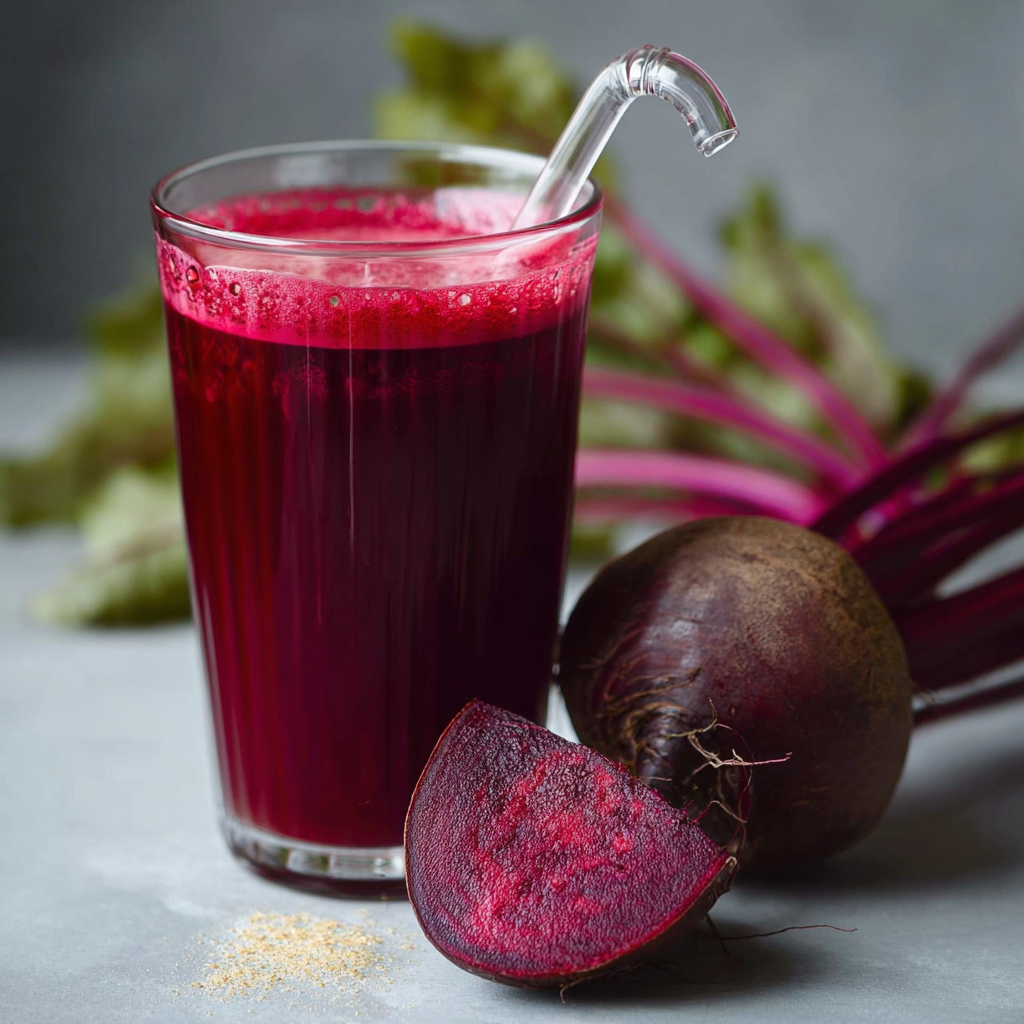
    Please remember to snap a picture of your beet juice before that gorgeous pink color disappears (trust me, it will disappear quickly), and leave a rating below. We’d love to hear how this beet juice recipe becomes part of your morning glow story.

    Star rate this recipe and join our cozy healthy drinks family.

  • 1-Pan Creamy Keto Chicken Broccoli Casserole

    1-Pan Creamy Keto Chicken Broccoli Casserole

    The first time I made keto chicken broccoli casserole, I dropped cold cream cheese straight into the warm pan without softening it first. Just the whole brick, unmelted. Jake poked it with a spoon and said, “Is that supposed to be like that?” It was not. I scraped it out, microwaved the cream cheese for thirty seconds, started again, and never made that mistake twice.

    Why This Recipe Is Special

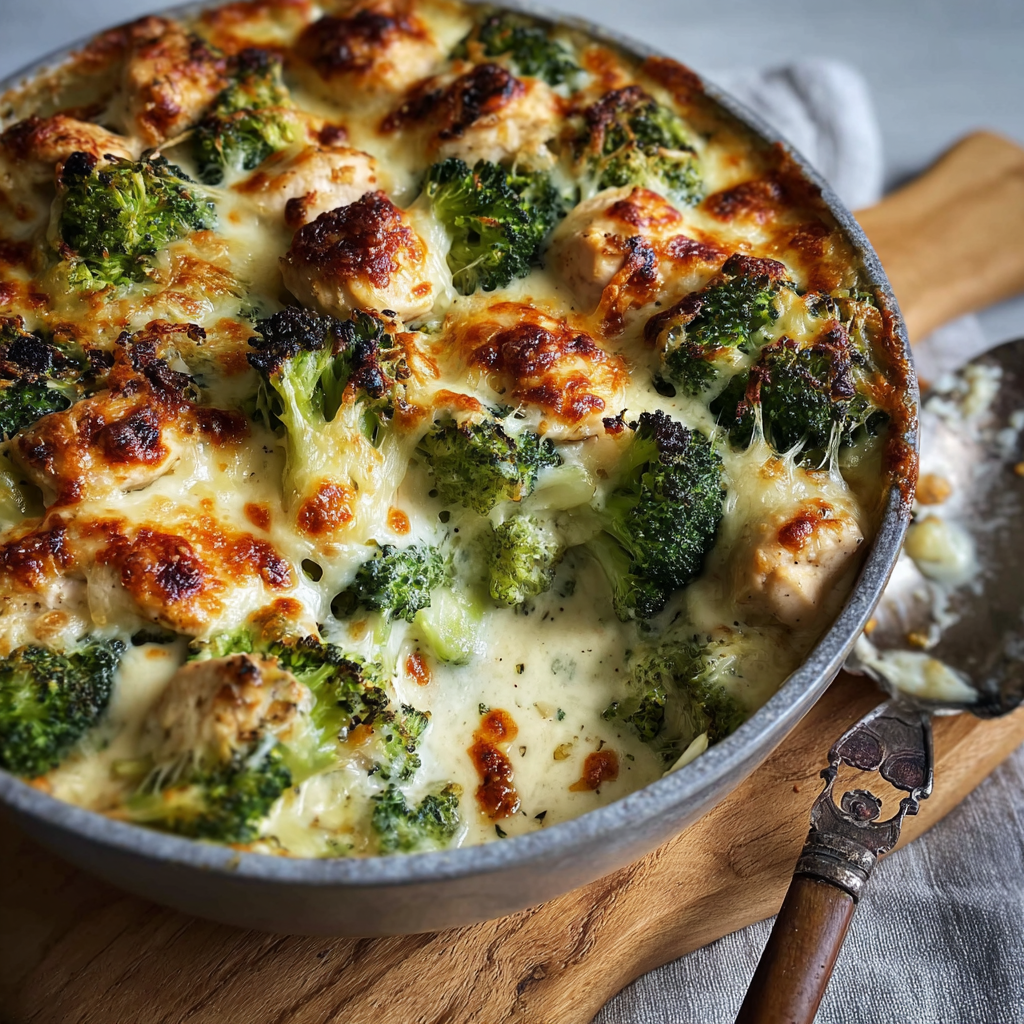
    Low-carb keto dinner recipes often sacrifice the one thing that makes dinner actually feel like dinner: the comfort. This one does not. The sauce is built from cream cheese, cream, and garlic, which means it is genuinely rich and creamy without a gram of flour or any starchy thickener. The chicken gets seared first so it stays juicy and golden inside the casserole rather than turning pale and sad. The broccoli holds its color and its slight bite. And on top of that, the bubbly, blistered cheddar and mozzarella crust is the reason everyone is at the table before you even call them.

    How To Make Keto Chicken Broccoli Casserole

    After the cream cheese incident, my second attempt had a proper audience. Emma had been reading about keto with the very serious energy she brings to anything she considers a “project,” and she wanted to help make a recipe that was actually engaging rather than, in her words, “just salad without the fun parts.” Jake’s position on anything keto had been suspicious until the moment he saw the amount of cheese going on top. He went very quiet, watched me scatter the second handful, and said, “Okay, I think I understand keto now.” That is the most nutritional insight he has offered to date, and I choose to take it as a win.

    Main Ingredients

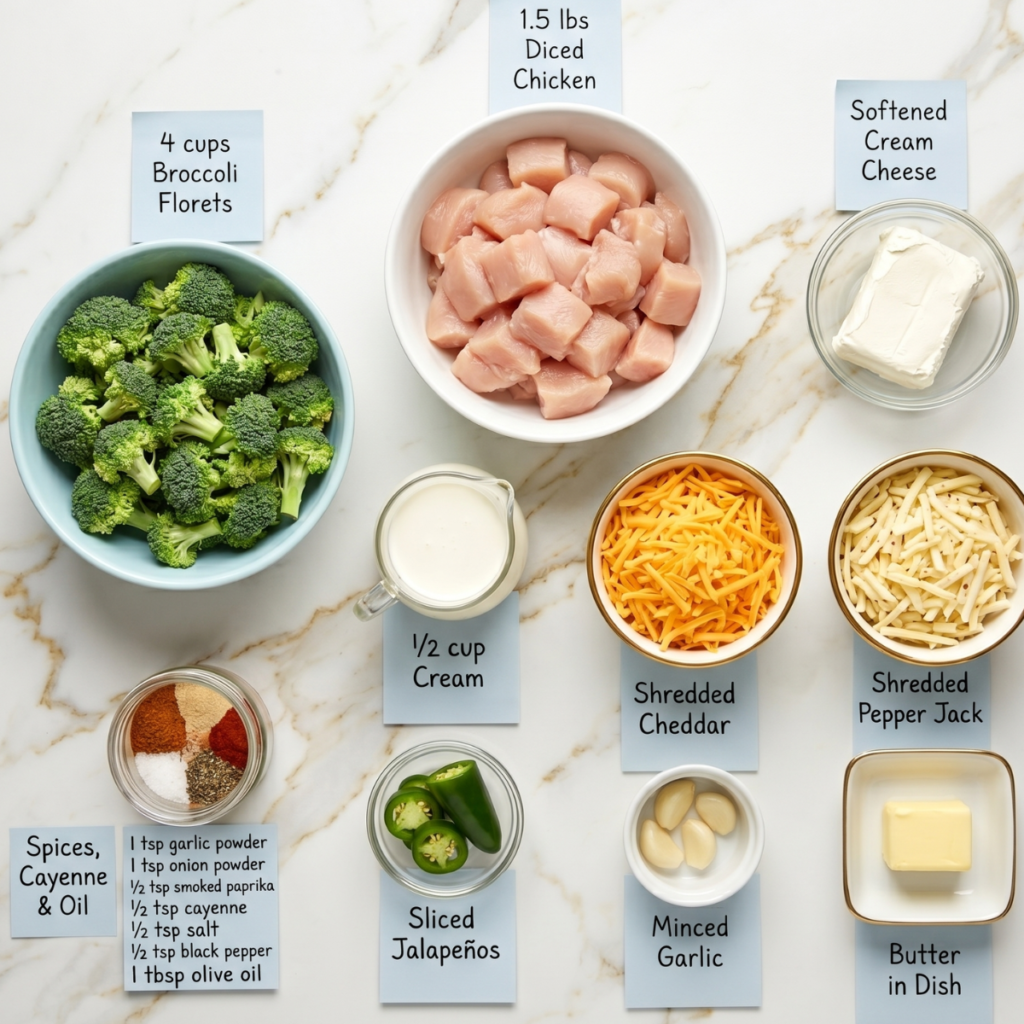
    • 1.5 lbs boneless skinless chicken breast or thighs: Cut into bite-sized pieces. Thighs stay juicier; breasts work well too.
    • 4 cups broccoli florets: About 1 large head. Cut small and uniform so they steam through in the oven.
    • 8oz full-fat cream cheese, softened: Room temperature or 30 seconds in the microwave. Cold cream cheese will not blend smoothly ask me how I know.
    • 1/2 cup heavy cream: Thins the cream cheese into a pourable sauce. Do not substitute with milk.
    • 1 cup shredded cheddar, divided: Half goes into the sauce, half on top for that golden bubbly crust.
    • 1 cup shredded mozzarella: The stretch and pull. Scattered on top alongside the cheddar.
    • 4 cloves garlic, minced: Sautéed in butter before the sauce goes in. The whole dish rests on this flavor.
    • 2 tbsp butter + 1 tbsp olive oil: Butter for the sauce base, oil for searing the chicken without burning.
    • 1 tsp garlic powder + 1 tsp onion powder: For seasoning the chicken before searing. Layer the garlic flavor throughout.
    • 1/2 tsp smoked paprika, salt, and pepper: Season generously. The cream sauce is rich and needs the chicken well seasoned to match it.

    Step-by-Step Instructions

    Step 1: Season and Sear the Chicken

    • Pat chicken pieces dry and toss with garlic powder, onion powder, smoked paprika, salt, and pepper.
    • Heat olive oil in a large oven-safe skillet over medium-high heat until shimmering.
    • Sear the chicken in a single layer for 3 to 4 minutes per side, until golden. Work in batches so the pan stays hot and the chicken sears rather than steams.
    • Remove the seared chicken to a plate; it does not need to be cooked through yet; it will finish in the oven.

    Step 2: Build the Cream Sauce

    • Reduce heat to medium, add butter to the same pan, and sauté minced garlic for 60 seconds until fragrant scrape up any golden bits from the chicken.
    • Add the softened cream cheese and heavy cream, stirring constantly until the cream cheese is fully melted into a smooth, silky sauce.
    • Stir in half the cheddar until it melts into the sauce, then taste and adjust salt and pepper.
    • Remove from heat; the sauce should be thick, creamy, and pourable. If it looks too thick, add a splash more cream.

    Step 3: Assemble and Top

    • Preheat oven to 375°F (190°C) and lightly grease a 9×13 inch baking dish if not using the oven-safe skillet.
    • Add the broccoli florets to the cream sauce in the pan and stir to coat every piece thoroughly.
    • Add the seared chicken back in and fold everything together gently so the broccoli and chicken are evenly distributed through the sauce.
    • Scatter the remaining cheddar and all the mozzarella evenly over the top; do not be shy with either.

    Step 4: Bake and Rest

    • Bake uncovered for 25 to 30 minutes until the cheese is deeply golden and bubbly at the edges and the broccoli is just tender when pierced with a fork.
    • If the cheese is bubbling but not golden after 25 minutes, switch to the broiler for 2 to 3 minutes and watch it closely; it goes from perfect to too dark very fast.
    • Remove from the oven and allow to rest for 5 minutes; the sauce thickens slightly and the portions come out much cleaner.
    • Serve directly from the dish with a large spoon, pulling up that glorious cheese pull every single time.

    Keto Chicken Broccoli Casserole Variations

    The Bacon and Ranch Version (Jake’s Crowning Contribution)

    Jake’s interest in this casserole went from polite to passionate the day I added bacon. Fry six rashers until crispy, crumble them over the top along with the cheese before baking, and stir one tablespoon of dried ranch seasoning into the cream sauce instead of the garlic powder and onion powder. The ranch flavor runs all the way through the sauce, and the bacon adds crunch and smoke to every single bite. Jake calls this “the good version.” I remind him the original is also excellent. He nods, unconvinced.

    Emma’s Spinach and Sun-Dried Tomato Upgrade

    Emma’s version is the one she makes when she wants to explain to her friends that keto food is actually excellent. Stir two large handfuls of fresh spinach into the sauce with the broccoli; it wilts down to almost nothing but adds color and iron. Add a quarter cup of roughly chopped oil-packed sun-dried tomatoes at the same stage. The tomatoes add an intense, jammy burst of flavor against the richness of the cream cheese sauce and make the whole dish look considerably more impressive than a Tuesday night dinner has any right to look.

    The Spicy Jalapeño and Pepper Jack Version (My Friday Night Treat)

    When both kids are happy with their food and I get to make a version just for me, this is it. Swap the mozzarella for shredded pepper jack, add two thinly sliced fresh jalapeños scattered over the top before baking, and stir half a teaspoon of cayenne into the cream sauce. The heat builds slowly through the cream, and the jalapeños blister beautifully under the broiler. Serve with a dollop of full-fat sour cream on the side. This is one of those very low-carb recipes that feels like a proper indulgence rather than a restriction.

    Substitutions

    • Heavy cream → Full-fat coconut cream works for a dairy-free version with a slightly different flavor, but the sauce still comes together. Do not use low-fat milk or half-and-half; they are too thin, and the sauce will be watery.
    • Cream cheese → Full-fat mascarpone is a richer, slightly less tangy substitute in the exact same quantity. For dairy-free, a full-fat cashew cream cheese works; check the carb count on the label, as it varies significantly by brand.
    • Broccoli → Cauliflower florets are an excellent keto-friendly swap. Zucchini cut into half-moons also works but releases water pat it dry first and reduce the cream by two tablespoons to compensate.
    • Cheddar and mozzarella → Any good melting cheese works here. Gruyère gives a nuttier flavor. A smoky gouda on top is extraordinary and worth trying when you want something different from your usual keto-friendly meal prep rotation.

    Equipment

    • Large oven-safe skillet or sauté pan (at least 12-inch)
    • 9×13-inch baking dish (only if skillet is not oven-safe)
    • Sharp knife and cutting board
    • Wooden spoon or silicone spatula
    • Tongs
    • Measuring cups and spoons
    • Instant-read thermometer
    • Cheese grater (freshly grated melts far better than pre-shredded)

    Storage Tips

    Make Ahead

    • Assemble the full casserole up to 24 hours ahead, cover tightly, and refrigerate unbaked.
    • Add 8 to 10 extra minutes of bake time if going straight from fridge to oven.
    • The cream sauce actually deepens in flavor overnight; make-ahead is genuinely better here.

    Refrigerator

    • Store cooled leftovers in an airtight container for up to 4 days.
    • This recipe is one of those keto-friendly meal prep dishes that is just as good on day three as day one.
    • The cream sauce firms up when cold; it loosens back to creamy with a splash of cream when reheating.

    Freezing

    • Freeze in individual portions in airtight freezer containers for up to 3 months.
    • Cream-based sauces can separate slightly after freezing; stir gently when reheating to bring them back together.
    • Thaw overnight in the fridge; do not microwave from completely frozen, as the sauce will separate.

    Reheating

    • Oven at 325°F for 15 to 18 minutes covered with foil is the best method; the sauce stays creamy.
    • Microwave individual portions covered loosely for 2 to 3 minutes at 70% power, stirring halfway.
    • Add a tablespoon of heavy cream per portion before reheating to restore the sauce consistency.

    Family Secret Worth Sharing

    The biggest flavor difference between a good keto chicken broccoli casserole and a great one comes down to a step most people skip entirely: searing the chicken. I know it feels like an extra pan and extra time when you could just throw everything in raw, and yes, technically it will cook through either way. But raw chicken dumped directly into a cream sauce comes out pale, soft, and flavorless; it tastes steamed because it is steamed.

    Those golden, caramelized edges on each chicken piece carry flavor that the cream sauce cannot replicate on its own. Three minutes per side in a hot pan, and the whole casserole tastes like it came from a restaurant rather than a weeknight kitchen. Jake noticed the difference without being told he took his first bite, looked up, and said “this one’s better than last time.” I did not tell him the only change was the searing step. Some secrets are better kept until they are old enough to appreciate them.

    Troubleshooting FAQs

    My sauce came out grainy or lumpy. What went wrong?
    Almost certainly the cream cheese was too cold. It needs to be genuinely soft, either left out at room temperature for an hour or microwaved for 25 to 30 seconds. The other cause is heat that is too high when you add the cream; keep it at medium and stir constantly. If the sauce does look grainy, take the pan off the heat entirely and stir vigorously; it usually comes back together with patience.

    The broccoli came out mushy. How do I keep it with more bite?
    Cut the florets on the larger side rather than very small pieces, which overcook quickly. Make sure the broccoli goes in raw rather than pre-steamed; it will cook perfectly in the baking time from raw. If you prefer it with more crunch, fold it into the sauce and then bake for the last 10 minutes only rather than the full time.

    The sauce seems too thin and watery after baking. What happened?
    This usually means the broccoli or chicken released water during baking. Pat the broccoli florets dry before adding them to the sauce, and make sure the seared chicken has rested and drained before folding it in. If using frozen broccoli, it must be completely thawed and very thoroughly dried. Next time reduce the cream by two tablespoons as a buffer.

    Can I make the dish without searing the chicken first?
    You can, but please read the Family Secret section above before deciding to. If you are genuinely short on time, season the raw chicken pieces well, fold them into the sauce with the broccoli, and increase the covered bake time to 35 minutes, then uncover for 10. The texture will be softer and the flavor less complex, but it will still be a very respectable easy low-carb recipe that the whole table will eat without complaint.

    The Casserole That Made Keto Feel Like Something to Look Forward To

    I did not go into keto cooking expecting to find something that would make both kids genuinely excited for dinner. I expected compliance, at best. What I got instead was Jake developing a working theory about cheese ratios and Emma explaining to her friend on the phone that “we’re having the broccoli one” in a tone that made it sound like a reward rather than a vegetable. That’s the whole thing, really: easy low-carb recipe cooking is not about what you take out, it’s about what you build in its place.

    A creamy garlic sauce, golden seared chicken, and cheese that stretches like that photo—every time this is what low-carb meal ideas look like when they actually work. When it stops being a diet dinner and starts being the one people ask for specifically.

    Whether this becomes the anchor of your chicken keto meal rotation, your go-to Sunday meal prep dish, or the first thing you make when someone in your life tells you they are trying to eat low carb and you want to prove it does not have to mean sad food, I hope it delivers. It really does. Make it once, and it earns its place permanently.

    Don’t forget to snap a picture of your keto chicken broccoli casserole before that first cheesy scoop disappears (trust me, it will disappear quickly!), and leave a rating below. We’d love to hear how this keto chicken broccoli recipe becomes part of your family weeknight story.

    Star rate this recipe and join our cozy low carb kitchen family.

  • 8-Ingredient Fudgy Healthy Brownie Recipe

    8-Ingredient Fudgy Healthy Brownie Recipe

    The first time I made a healthy brownie recipe, I used black beans. I blended them up and baked them proudly, and Jake took one bite, put it down, and said, “Mum, these taste like a garden.” Emma just looked at the plate and walked away. I ate the whole tray myself out of stubbornness and started over the next morning with an entirely different approach.

    Why This Recipe Is Special

    This is the healthy brownie recipe that actually tastes like a brownie. Not a health food that pretends to be one. Not something you eat with a resigned expression and tell yourself is fine. These have a proper crinkle top, a fudgy center, and that deep chocolate richness that makes you close your eyes for a second when you take a bite. The secret is swapping refined ingredients for better ones without stripping out the things that make brownies worth eating. Coconut oil instead of butter, maple syrup instead of white sugar, and almond flour instead of plain flour. Three swaps. That is all the recipe is.

    How To Make Healthy Brownies

    After the bean incident, I spent two weeks testing versions until I landed on this one. Jake came into the kitchen for the third test batch, sniffed the air, and said “that actually smells like brownies.” High praise. Emma positioned herself by the oven for the last ten minutes of baking time with the focused energy of someone awaiting very important news. When I cut the first square and the center was still fudgy and glossy and entirely brownie-shaped, she grabbed it before I could say a word and ate it standing at the counter. “These are the good ones,” she confirmed, with absolute authority. They are. They really are.

    Main Ingredients

    • 3 large eggs, room temperature: The whole structure. They create the crinkle top when whisked properly with the maple syrup.
    • 1/2 cup coconut oil, melted and cooled: Replaces butter entirely. Refined coconut oil has no coconut flavor if you prefer neutral.
    • 1/2 cup pure maple syrup: Real maple only. It sweetens gently and adds a subtle depth that white sugar cannot.
    • 2 tsp pure vanilla extract: Real vanilla matters here. It smooths out the cocoa and rounds the whole flavor.
    • 3/4 cup unsweetened cocoa powder Dutch-process gives the deepest, most fudgy result. Do not use hot drink powder.
    • 1 cup blanched almond flour: Finely ground blanched almond flour only not almond meal, which is coarser and drier.
    • 1/2 tsp baking powder + 1/4 tsp salt: Just enough lift without making these cakey. The salt is as important as the chocolate.
    • 1/3 cup dark chocolate chips (70%+): Optional but strongly advised. They melt into fudgy pockets throughout.

    Step-by-Step Instructions

    Step 1: Preheat and Prep Your Pan

    • Preheat oven to 350°F (175°C) and line an 8×8 inch baking pan with parchment, leaving an overhang on two sides.
    • Melt the coconut oil gently in a small saucepan or in the microwave in 20-second bursts; do not let it get hot.
    • Allow the melted coconut oil to cool for 3 to 4 minutes before using; hot oil will scramble your eggs when combined.
    • Set the lined pan aside on a flat, level surface so you can pour the batter straight in without adjusting.

    Step 2: Build the Batter

    • In a large bowl, whisk the eggs, maple syrup, cooled coconut oil, and vanilla together for a full 2 minutes until the mixture lightens slightly in color and looks glossy.
    • Sift the cocoa powder directly into the wet mixture sifting removes lumps and means you do not spend the next five minutes chasing them with a whisk.
    • Add the almond flour, baking powder, and salt, and fold gently with a rubber spatula until just combined; do not overmix.
    • Fold in the chocolate chips with 3 or 4 gentle strokes; the batter will be thick, glossy, and considerably more promising than a garden.

    Step 3: Bake

    • Pour and spread the batter evenly into the prepared pan a small offset spatula is ideal, but the back of a spoon works perfectly well.
    • Bake for 20 to 24 minutes; the top should look set and matte, with the edges pulling very slightly from the sides of the pan.
    • A toothpick inserted into the center should come out with a few moist, fudgy crumbs wet batter means more time; completely clean means slightly overbaked.
    • Remember that these will continue to firm up as they cool, so pulling them a minute early is always the right instinct.

    Step 4: Cool and Slice

    • Allow to cool in the pan for at least 20 full minutes before attempting to lift or slice; the structure needs that time.
    • Lift out using the parchment overhang and transfer to a cutting board.
    • Slice with a sharp knife, wiping the blade clean between cuts for neat, clean edges.
    • The squares will firm up further as they cool to room temperature, genuinely being better 30 minutes out of the oven than at 5 minutes.

    Healthy Brownies Variations

    The Espresso and Sea Salt Version (My Absolute Favourite)

    This is what I make when I want something that feels genuinely sophisticated rather than just quietly nutritious. Add one teaspoon of instant espresso powder to the wet ingredients; it deepens the chocolate flavor in a way that is almost startling, without tasting at all like coffee. Then scatter a generous pinch of flaky sea salt across the top before baking. The salt crystals catch the light, and the flavor combination is the kind that makes people ask what is in these?” and then immediately ask for the second one.

    Jake’s Peanut Butter Marble (Non-Negotiable on Weekends)

    Jake discovered that peanut butter swirled into anything becomes his favorite version of that thing, and he is correct. Pour the batter into the pan, then drop four or five generous tablespoons of natural peanut butter across the surface. Drag a butter knife through in slow, wide strokes to create a rough marble pattern. The peanut butter bakes in and becomes dense and salty against the dark chocolate. Jake considers this his recipe. He did not develop this recipe. He suggested it once, and I tested it four times to get it right. I have given him full credit anyway.

    Emma’s Raspberry Swirl (The “Pretty One”)

    Emma’s contribution was aesthetic rather than flavor-based: she wanted them to be prettier. She pressed eight or nine fresh raspberries into the top of the batter before baking and scattered a small handful of extra chocolate chips around them. The raspberries sink slightly as they bake, leaving little jewel-pink pockets in the dark chocolate. Emma presents these to anyone who visits with the energy of someone unveiling something significant. She is not wrong; they do look extraordinarily good, and the sharp raspberry against the rich chocolate is exactly as good as it sounds.

    Substitutions

    • Almond flour → Oat flour works well and gives a slightly more cake-like result. Use the same quantity. For nut-free, sunflower seed flour is a reliable 1:1 swap. Regular all-purpose flour also works, but you lose the grain-free benefit.
    • Maple syrup → Honey is the closest swap in the same quantity, slightly denser, with a gentle floral note. Coconut sugar dissolved in a tablespoon of warm water also works; use 1/2 cup and adjust to taste.
    • Coconut oil → Melted unsalted butter works as a direct swap for a more traditional brownie flavor. For dairy-free, neutral avocado oil works; use 6 tablespoons since it is more liquid than solid coconut oil.
    • Eggs → For a vegan version, two flax eggs (2 tablespoons ground flaxseed mixed with 6 tablespoons water, rested 10 minutes) plus one tablespoon of extra coconut oil gives a dense, fudgy result. The crinkle top will not form, but the flavor holds up very well.

    Equipment

    • 8×8 inch baking pan
    • Parchment paper
    • Large mixing bowl
    • Whisk
    • Rubber spatula
    • Fine mesh sieve (for cocoa powder)
    • Small offset spatula
    • Sharp knife for slicing
    • Cooling rack
    • Toothpick or skewer

    Storage Tips

    Make Ahead

    • Brownies can be baked up to 2 days before serving; they improve as they sit.
    • Store whole or sliced; the cut surface benefits from being pressed against parchment if stored sliced.
    • Batter can be made and refrigerated for up to 24 hours before baking bring to room temperature first.

    Refrigerator

    • Store in an airtight container at room temperature for 4 days or in the fridge for up to 7 days.
    • Cold brownies are actually excellent; the texture firms into something almost truffle-like.
    • Let refrigerated brownies sit at room temperature for 15 minutes before serving for best texture.

    Freezing

    • Freeze individual squares wrapped tightly in parchment, then placed in a zip-lock freezer bag.
    • Keeps well for up to 3 months; these freeze better than almost any other baked good I make.
    • Thaw at room temperature for an hour or in the fridge overnight from frozen.

    Reheating

    • Microwave a single square for 12 to 15 seconds; it comes back to warm, fudgy life immediately.
    • Oven at 300°F for 5 to 6 minutes, covered loosely with foil if reheating several at once.
    • Serve warm with a spoonful of natural yogurt for a dessert that feels completely indulgent.

    Family Secret Worth Sharing

    The crinkle top on a brownie is not luck; it is technique. Those gorgeous, papery, cracked ridges come from one specific step: whisking the eggs and sweetener together properly before anything else goes in. In a traditional brownie, that means dissolving the sugar into warm butter. In this recipe it means whisking the eggs with the maple syrup for a full two minutes until the mixture turns slightly pale and leaves a ribbon when you lift the whisk.

    The first time Emma helped me make these, she was in charge of the whisking. She gave it about thirty seconds and declared it done. The top of those brownies came out completely flat and sad. The second batch, I set a timer, and she whisked for the full two minutes, looking deeply put-upon about it. Crinkle top. Perfect. That is the whole secret. She has never skipped the two minutes since, though she does sigh heavily while doing it, which I respect as her right.

    Troubleshooting FAQs

    My brownies came out dry and cakey. What happened?
    Two likely causes: it was overbaked, or the almond flour was packed too tightly when measured. For almond flour, always spoon it into the measuring cup and level it off; never scoop directly from the bag. Pull them the moment the toothpick has moist crumbs rather than waiting for it to come out clean. These are meant to underbake very slightly and firm up as they cool.

    My batter looks too thick to spread. Is that normal?
    Completely normal almond flour batter is considerably thicker than regular wheat flour batter. Spread it with a small offset spatula or the dampened back of a spoon. If it seems unusually stiff, check that your coconut oil was fully liquid before adding it; partially solid coconut oil will make the batter seize up unevenly.

    Can I use cocoa powder from a hot drink mix like Cadbury?
    I would really steer you away from this. Drinking chocolate mixes contain added sugar and dried milk, which will throw off the balance of the recipe. Use unsweetened pure Dutch-process cocoa powder for the deepest flavor or natural cocoa if that is what you have. The quality of the cocoa is probably the single most important ingredient in this recipe.

    There is no crinkle top on mine. What did I do wrong?
    Ask Emma; she knows. The crinkle top comes from fully whisking the eggs and maple syrup together for the full two minutes before adding anything else. Thirty seconds is not enough. Set a timer, whisk properly, and it will happen every single time.

    The Brownies That Made the Bean Version Worth Forgetting

    Last Saturday I made a double batch of these and put them on the counter to cool. Forty minutes later I came back to find that Emma had eaten two and Jake had eaten three, and there were exactly seven squares left out of sixteen. Neither of them mentioned it. They just walked around looking extremely casual and slightly chocolatey. I said nothing. This is what healthy homemade brownies should be: the kind that disappear without ceremony, that nobody describes as “healthy” when they are eating them because they are just too busy eating them.

    These are the kind of healthy baked dessert recipes that earn their place in your permanent rotation not because they are good for a healthy brownie but because they are genuinely, honestly, no-qualification-needed good. Full stop. The kids agree. The bean brownies are never spoken of.

    Whether you make these for a lunchbox, a dinner party, a school bake sale where you quietly want to be the parent who brought the best thing, or just for a quiet Tuesday evening when you want something that feels like a proper treat without the aftermath, these are it. The kind of effortless, healthy baking recipes that will not last. They never do.

    Don’t forget to snap a picture of your healthy brownies before that first square disappears from the board (trust me, it will disappear quickly!), and leave a rating below. We’d love to hear how this healthy brownie recipe becomes part of your family baking story.
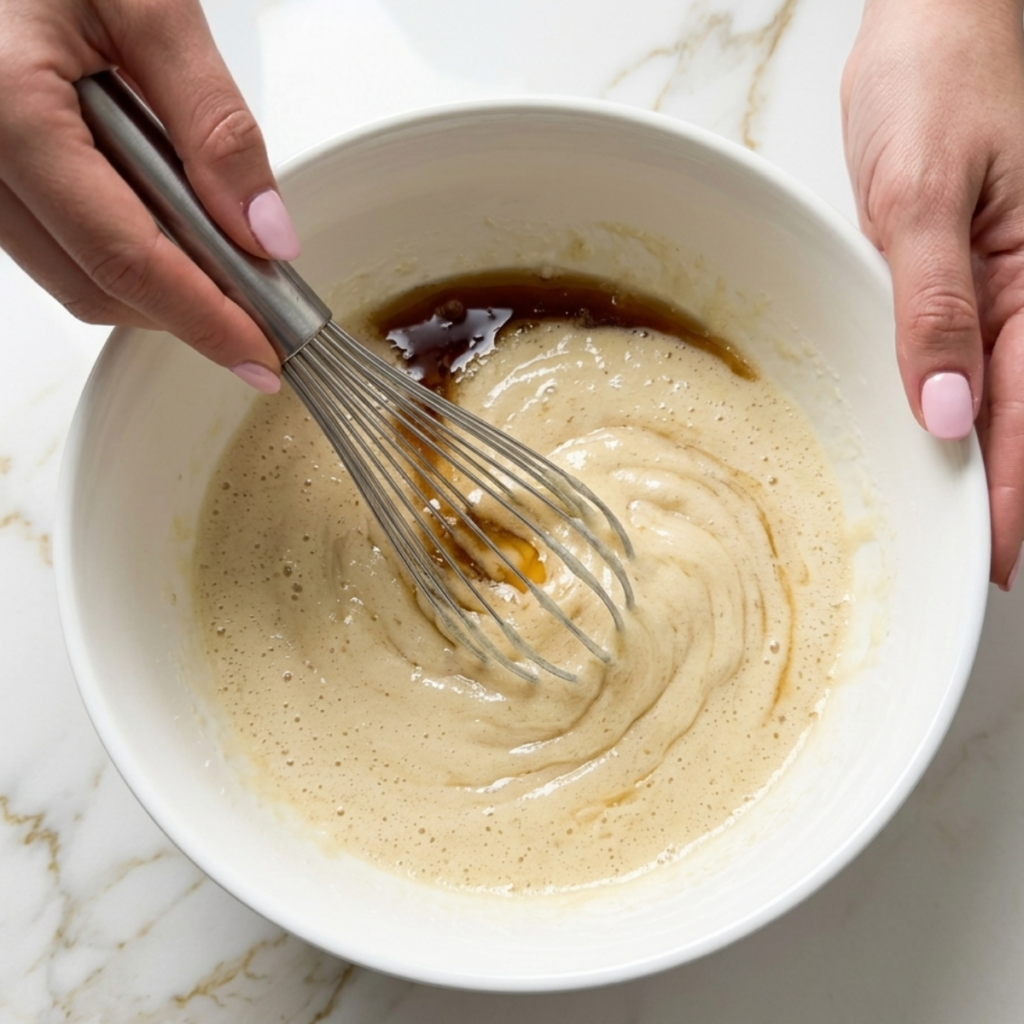
    Star rate this recipe and join our cozy healthy baking family.

  • Easy One Pot Chicken and Rice Recipe

    Easy One Pot Chicken and Rice Recipe

    The first time I made one pot chicken and rice in one pot, I tipped the dry rice straight in before the broth. Just right on top of the raw chicken. Jake stared at it for five seconds and said, very quietly, “is that right?” It was not right. I fished out what I could, started over, and produced something so good Emma declared it her birthday dinner request. In October. For March.

    Why This Recipe Is Special

    One pot dinners get a bad reputation for being boring, and I think that is deeply unfair. This one earns its place at the table every single week. The chicken thighs get seared first so the skin turns golden and stays that way. The rice toasts in the leftover drippings before the broth even goes in, picking up all that savory chicken fat flavor. The whole thing simmers together into something deeply satisfying, a proper healthy meal that tastes like you were in the kitchen for hours, even though you genuinely were not.

    How To Make One Pot Chicken and Rice

    After my dry-rice disaster, I started making this on rotation, which means both kids have now watched me make it enough times to have opinions. Emma thinks I add too much garlic. Jake thinks I add too little. They have been having this argument for two months, and I have been quietly keeping the garlic exactly where I like it, which is firmly in the middle. The recipe has become a kind of Thursday night ritual: I sear the chicken, Jake sets the table without being asked because he knows dinner is coming, and Emma hovers near the pot asking when it will be ready approximately every four minutes.

    Main Ingredients

    • 6 bone-in, skin-on chicken thighs: Thighs over breasts every time. They stay juicy and flavorful through the long simmer.
    • 1 1/2 cups long-grain white rice: Rinsed until the water runs clear. Removes excess starch for separate, fluffy grains.
    • 2 1/2 cups low-sodium chicken broth: The flavor base. Low-sodium lets you control the salt level throughout.
    • 1 medium yellow onion, diced: Sautéed in the drippings after searing builds the whole flavor base.
    • 4 garlic cloves, minced: Jake says more; Emma says less; I say four is perfect, and I am the one cooking.
    • 1 tsp smoked paprika + 1 tsp cumin: The two spices that make this taste like something rather than just rice and chicken.
    • 1 tsp dried thyme + 1 bay leaf: Background herbs. You notice them more when they are missing.
    • Salt, pepper, and 1 tbsp olive oil: Season the chicken generously before searing. This is where the flavor really starts.
    • Juice of half a lemon: Squeezed in right at the end. It lifts the whole dish and makes it taste finished.
    • Fresh parsley, roughly chopped: For garnish and freshness. Emma picks hers off, but it looks beautiful.

    Step-by-Step Instructions

    Step 1: Season and Sear the Chicken

    • Pat chicken thighs completely dry with paper towels moisture is the enemy of a golden sear.
    • Season generously on both sides with salt, pepper, smoked paprika, and cumin.
    • Heat olive oil in a large heavy-bottomed pot or Dutch oven over medium-high heat until shimmering.
    • Add chicken skin-side down and sear undisturbed for 5 to 6 minutes until deeply golden; flip and sear 3 more minutes, then remove to a plate it will finish cooking in the pot.

    Step 2: Build the Flavour Base

    • Reduce heat to medium and add diced onion directly to the same pot, scraping up any golden bits from the bottom.
    • Cook the onion for 4 to 5 minutes until soft and translucent, stirring occasionally.
    • Add minced garlic and dried thyme and stir for 60 seconds until fragrant; do not let the garlic brown.
    • Add the rinsed rice and stir to coat every grain in the drippings, toasting for 2 minutes until it smells nutty.

    Step 3: Add the Broth and Simmer

    • Pour in the chicken broth, add the bay leaf, stir to combine, and taste for seasoning; adjust salt now before the lid goes on.
    • Nestle the seared chicken thighs skin-side up on top of the rice, pressing them in slightly so they sit level.
    • Bring to a gentle boil, then reduce heat to low and cover with a tight-fitting lid.
    • Simmer undisturbed for 25 minutes; do not lift the lid, the steam is doing the work, and every peek costs you fluffy rice.

    Step 4: Rest, Finish, and Serve

    • Remove from heat and leave the lid on for a full 5 minutes — the rice finishes absorbing moisture and the chicken finishes cooking through.
    • Remove and discard the bay leaf, then squeeze the lemon juice over everything.
    • Check that the chicken has reached 165°F internally; if not, cover and return to low heat for 5 more minutes.
    • Scatter with fresh parsley and serve directly from the pot one less dish, maximum satisfaction.

    One Pot Chicken and Rice Variations

    The Lemon Herb Version (Emma’s “Can We Have the Green One”)

    Emma went through a phase of requesting “the green one” every single week, and this is it. Add a full teaspoon of lemon zest to the broth along with a handful of fresh spinach stirred in right at the end when you lift the lid for the rest. Swap the cumin for dried oregano and use vegetable broth for a slightly lighter result. The spinach wilts into the rice, and the whole pot turns this beautiful pale green that Emma finds deeply satisfying. So do I, honestly.

    The Tomato and Olive (Jake’s “Make It Spanish, Mum” Request)

    Jake became obsessed with Spanish rice after a school trip project, and this is what came out of that obsession. Add one 14-ounce can of diced tomatoes when you pour in the broth, reduce the broth by half a cup to compensate for the extra liquid, and stir in a handful of pitted Kalamata olives and a pinch of saffron if you have it. The rice turns deep rust-red, and the whole thing tastes bold and rich and a little smoky. Jake considers this his personal contribution to the family recipe collection. I let him have that.

    The Turmeric and Coconut Milk (My Thursday Treat Version)

    On Thursday evenings when I want something that feels more interesting without doing more work, I swap half the chicken broth for full-fat coconut milk, stir in a teaspoon of ground turmeric with the spices, and add a thumb of grated ginger with the garlic. The rice turns a gorgeous golden yellow, and the whole dish tastes creamy and fragrant. Serve with a wedge of lime instead of lemon and scatter with fresh coriander. Both kids eat it without complaint, which in this house is a very high bar.

    Substitutions

    • Chicken thighs → Bone-in drumsticks work exactly the same way. Boneless skinless thighs also work; skip the searing step and just brown briefly, they cook faster, so check at 20 minutes. Avoid chicken breasts; they dry out before the rice is done.
    • Long-grain white rice → Basmati rice is excellent and gives a slightly more aromatic result. Brown rice needs an extra half cup of broth and 15 more minutes of cooking time. Do not substitute short-grain or arborio; they turn too starchy in this method.
    • Chicken broth → Vegetable broth makes this surprisingly good and works especially well with the turmeric-coconut variation. Water can be used in a pinch, but you will need to season much more aggressively to compensate.
    • Smoked paprika → Sweet paprika works fine and gives a milder result. For more warmth, swap for mild chili powder. The smoked version is worth having in your spice rack, though it shows up in so many Easy Recipes With White Rice and transforms the flavor profile of even the simplest dish.

    Equipment

    • Large Dutch oven or heavy-bottomed pot (at least 5-quart)
    • Tight-fitting lid
    • Tongs
    • Wooden spoon or spatula
    • Sharp knife and cutting board
    • Measuring cups and spoons
    • Instant-read thermometer
    • Fine mesh strainer (for rinsing rice)

    Storage Tips

    Make Ahead

    • Season the chicken and prep all vegetables up to 24 hours ahead; store covered in the fridge.
    • The entire cooked dish holds well, and the flavor deepens noticeably by the next day.
    • Make the full pot on Sunday and portion it for weekday lunches; it holds beautifully for 4 days.

    Refrigerator

    • Store cooled leftovers in an airtight container in the fridge for up to 4 days.
    • Keep chicken and rice together; the rice absorbs the juices overnight and gets even better.
    • The rice will firm up when cold; a splash of broth or water when reheating brings it right back.

    Freezing

    • Cool completely before freezing freeze in individual portions for easy weeknight meals.
    • Keeps well for up to 3 months; the chicken holds better than the rice texture-wise.
    • Thaw overnight in the fridge for best results; avoid microwaving from completely frozen.

    Reheating

    • Add 2 to 3 tablespoons of water or broth per portion before reheating to restore moisture.
    • Stovetop over low heat, covered for 8 minutes, is the best method: gentle and even.
    • Microwave works in a pinch: cover loosely, 2 minutes at 70% power, and stir halfway through.

    Family Secret Worth Sharing

    The single biggest upgrade I ever made to this recipe was toasting the rice. Before I learned to do this, my one-pot chicken and rice was fine pleasant, filling, totally fine. The moment I started stirring the rinsed rice through those chicken drippings for two full minutes before the broth went in, everything changed. The grains pick up all that rendered fat and golden fond from the bottom of the pot, and what comes out the other end tastes genuinely complex and savory rather than just starchy and neutral.

    My mum never toasted her rice. She would pour it straight in, and the result was perfectly acceptable. But one evening I watched a restaurant cook on television spend what looked like an embarrassingly long time just stirring dry rice in a hot pan, and something clicked. Two minutes of patience before the liquid goes in is worth more than any extra ingredient you could add. I have told Jake and Emma this. They roll their eyes. They will understand one day when they are making this for their own families and everything clicks.

    Troubleshooting FAQs

    My rice came out mushy. What went wrong?
    Almost always one of three things: too much liquid, the lid was not tight enough, or the heat was too high during the simmer. Check your measurements carefully; even a quarter cup extra of broth makes a difference. Make sure the lid seals properly and that your simmer is genuinely low, not medium-low pretending to be low.

    The rice is cooked, but the chicken is not done yet. What do I do?
    Pull the chicken out and cover the rice to keep it warm. Place the chicken in a hot oven at 400°F for 8 to 10 minutes to finish cooking through. This is almost always a lid seal issue or a heat issue next time go slightly lower and slightly longer. An instant-read thermometer is genuinely worth having for exactly this situation.

    The rice stuck to the bottom of the pot. Is it ruined?
    Not at all that crispy layer on the bottom is actually prized in many cultures, and it tastes incredible. Scrape it up and serve it. If it is more burnt than crispy, the heat was too high; next time use a lower simmer and a heavier pot if you have one.

    Can I use chicken breasts instead of thighs?
    Technically yes, but I would steer you away from it. Breasts cook faster and have less fat, so they tend to dry out before the rice finishes. If you really prefer breasts, use boneless, skinless ones and check them at the 18-minute mark; pull them out at 165°F and let the rice finish covered without them.

    The Pot That Turned Thursday Into Our Favourite Night

    There is something about a one-pot dinner that changes the whole atmosphere at the table. No separate sides to juggle, no four different things to time, no pile of dishes at the end. Just one pot that comes to the table steaming and golden and smells like someone put real effort in, even when you made the whole thing during homework hour. This is what I mean when I talk about a healthy meal that actually gets made—not the aspirational Tuesday salad that becomes Wednesday takeout, but the Thursday pot that you come home to making again and again.

    Emma eats two full bowls and picks the parsley off the top of both. Jake asks every single time if there is more chicken, as though the pot has a secret compartment I have been hiding from him. And I sit there at the end of the week feeling genuinely like I got dinner right. It is such a small thing and such a big thing at the same time.

    Whether this becomes your Sunday meal prep anchor, your weeknight fallback, or the first one of your Easy Recipes With White Rice that the whole family agrees on, I hope it gives you the same Thursday feeling it gives us. Make it once, and it will be in permanent rotation before the week is out.

    Don’t forget to snap a picture of your chicken and rice before that first scoop disappears from the pot (trust me, it will disappear quickly!), and leave a rating below. We’d love to hear how this chicken and rice recipe becomes part of your family weeknight story.

    Star rate this recipe and join our cozy weeknight cooking family.

  • Easy Brown Butter Brookies Recipe

    Easy Brown Butter Brookies Recipe

    The first time I made brown butter brookies, I burned the butter so badly Jake came running in yelling, “MOM IS IT A FIRE?” Emma stood in the doorway holding her stuffed rabbit, looking genuinely concerned. I started over and burned it again during a homework argument. Third try? The most extraordinary thing I have ever pulled from our oven. The smoke alarms were honestly worth it.

    Why This Recipe Is Special

    A brookie is exactly what it sounds like: a brownie and a cookie baked into one impossibly delicious bar. But this version is not just any brookie. The butter gets browned first, filling the kitchen with that warm, nutty, almost caramel smell that makes both kids materialize at the counter without being asked. The layers are built in a specific order so neither one overbakes you get a genuinely fudgy brownie bottom and a genuinely chewy cookie top in the same bite. It is a completely unreasonable amount of joy in one pan.

    How To Make Brown Butter Brookies

    By my third attempt, I had both kids stationed at the stove with me. Jake was on official brown-butter watch; his job was to tell me the moment the foam settled and he could see the golden bits forming at the bottom. He took this responsibility extremely seriously. Emma pressed the first layer of cookie dough into the pan and kept sneaking chips from the bowl. “That is a tax,” she told me, completely straight-faced. Nine years old, going on forty-five. The whole kitchen smelled like a bakery, and even the process was worth it.

    Main Ingredients Brownie Batter

    • 10 tbsp salted butter: Browned in a light-colored pan until nutty and golden. The whole flavor foundation.
    • 3 tbsp vegetable oil: Keeps the brownie fudgy even after cooling. Do not skip.
    • 4 oz semi-sweet chocolate, finely chopped: Melted directly into the warm brown butter.
    • 1/4 cup cocoa powder: Used alongside the melted chocolate for extra depth.
    • 3 large eggs, room temperature: Whisked with sugar until fully dissolved for that shiny crust.
    • 1 cup granulated + 1/4 cup powdered sugar: The combo creates the gorgeous, paper-thin, shiny brownie top.
    • 2 tsp vanilla extract + 1/2 tsp salt: Real vanilla only.
    • 1 cup all-purpose flour Spooned and leveled, never scooped.

    Main Ingredients Cookie Dough

    • 3/4 cup salted butter, melted: Melted, not browned; this is what makes the cookies chewy.
    • 3/4 cup each of granulated and brown sugar: Brown sugar keeps them soft and chewy for days.
    • 2 large eggs + 2 tsp vanilla, room temperature: Room-temp eggs mix in smoothly.
    • 2 1/4 cups flour + 1 tsp baking soda + 1/2 tsp salt: Fold until just combined.
    • 2 cups semi-sweet chocolate chips: 1.5 cups in dough, rest scattered on top before baking.

    Step-by-Step Instructions

    Step 1: Make the Cookie Dough

    • Melt the butter, then whisk in both sugars, both eggs, and vanilla until smooth.
    • Stir in the flour, baking soda, and salt until just combined; do not overwork.
    • Fold in 1 1/2 cups of chocolate chips, keeping the rest for topping.
    • Divide the dough in half, press one half into a parchment-lined 9×13 to form a sheet, carefully lift it out intact, and set it aside; this is your middle layer.

    Step 2: Brown the Butter and Build the Brownie Batter

    • Melt 10 tbsp butter in a light-colored saucepan over medium heat, stirring constantly, until it foams, the foam settles, and golden-brown specks form on the bottom with a nutty caramel aroma; then pull off heat immediately.
    • Whisk in chopped chocolate, vegetable oil, and cocoa powder until smooth, then cool 5 minutes.
    • In a separate large bowl, vigorously whisk eggs and granulated sugar for 2 full minutes until sugar dissolves, then whisk in powdered sugar, vanilla, and salt.
    • Fold the chocolate mixture into the egg bowl, then gently fold in the flour until no dry streaks remain.

    Step 3: Layer and Assemble

    • Preheat oven to 350°F (175°C) and line a fresh 9×13 pan with parchment, leaving an overhang on both long sides.
    • Spread half the brownie batter in an even layer across the bottom of the pan.
    • Lay the pre-formed cookie dough sheet directly on top of the brownie layer.
    • Spread the remaining brownie batter over the cookie layer, then drop the remaining cookie dough in small discs across the surface and scatter the reserved chocolate chips.

    Step 4: Bake, Rest, and Slice

    • Bake for 26 to 30 minutes: edges set, top matte not shiny, toothpick has moist crumbs, not wet batter.
    • Do not overbake; they finish setting as they cool and will look slightly underdone when right.
    • Cool in the pan for at least 30 minutes before lifting out using the parchment handles.
    • For the cleanest slices, cool fully and wipe the knife between cuts or cut warm and embrace the glorious mess.

    Brown Butter Brookies Variations

    The Salted Caramel Drizzle (Emma’s “Make It Pretty” Edition)

    Emma’s position is that everything is improved by being drizzled on. She is mostly correct. Drizzle the cooled brookies with salted caramel sauce and a scatter of flaky sea salt before slicing. The caramel soaks into the top cookie layer, and the salt cuts through all that chocolate richness in a way that makes your eyes close involuntarily. Emma presents these with the energy of someone accepting an award.

    The Peanut Butter Swirl (Jake’s Non-Negotiable Request)

    Jake decided that all chocolate things are better with peanut butter, and he is simply not wrong. After pouring the top brownie layer, drop five or six large spoonfuls of peanut butter across the surface and drag a butter knife through in slow, lazy swirls. The peanut butter bakes in and creates rich, salty ribbons through the fudgy layer. Jake calls this “the best thing in our house,” and I choose not to take that personally.

    The White Chocolate and Raspberry (My Quiet Afternoon Version)

    When I get the kitchen to myself, rare and precious, I swap half the semi-sweet chips for white chocolate and press eight or ten fresh raspberries into the top layer before baking. They create little jewel-like pockets of tart fruit against the dark chocolate richness. The fanciest thing this kitchen has produced, and it takes no extra effort at all.

    Substitutions

    • Salted butter → Unsalted works in both layers; add an extra pinch of salt to each. The brown butter flavor comes from the browning process, not the salt.
    • Semi-sweet chocolate → Dark chocolate (60 to 70% cacao) gives a more intense, less sweet brownie. Milk chocolate makes the whole bar sweeter.
    • Vegetable oil → Any neutral oil works: sunflower, canola, or light coconut. Avoid olive oil. Do not leave it out; it keeps the brownie fudgy rather than cakey.
    • All-purpose flour → A 1:1 gluten-free baking flour works in both layers with no other changes. Tested for a friend, the brookies disappeared in under an hour.

    Equipment

    • 9×13 inch baking pan
    • Parchment paper
    • Light-coloured saucepan (essential for browning butter)
    • Two large mixing bowls
    • Whisk
    • Rubber spatula
    • Kitchen scale (highly recommended)
    • Oven thermometer
    • Cooling rack
    • Sharp knife for slicing

    Storage Tips

    Make Ahead

    • Make both batters and the pre-formed cookie sheet up to 24 hours ahead, cover, and refrigerate.
    • Let everything come to room temperature for 20 minutes before assembling and baking.
    • The fully assembled unbaked pan can be refrigerated overnight and baked fresh the next day.

    Refrigerator

    • Store cooled sliced bars in an airtight container at room temperature for 3 to 4 days.
    • If your kitchen runs warm, the fridge extends freshness to 5 to 6 days; bring it to room temperature before eating.
    • A 10 to 15 second microwave warm-up restores that just-baked fudgy texture beautifully.

    Freezing

    • Freeze fully cooled individual bars on a baking sheet first, then transfer to a zip-lock freezer bag.
    • Keeps well for up to 2 months; the brownie layer freezes particularly well.
    • Thaw at room temperature for an hour or warm gently in the microwave from frozen.

    Reheating

    • Microwave a single bar for 15 to 20 seconds; it comes back to life spectacularly.
    • Oven: place bars at 300°F for 6 to 8 minutes, covered loosely with foil.
    • Serve warm with vanilla ice cream if you want to cause a scene in your own kitchen.

    Family Secret Worth Sharing

    Brown butter terrified me for years. It goes from perfect to ruined so fast that the first two times I made these, I either pulled it too early or went two seconds too far into a smoky kitchen and two alarmed children. The fix my mom finally showed me: use a light-colored pan so you can actually see the color change. Dark nonstick hides everything, and that is how you end up overcooking it every time.

    Watch for three stages: first it foams, then the foam settles, then tiny golden-brown specks appear on the bottom, and it smells like warm hazelnuts and caramel. That third-stage moment five seconds after the smell hits you is when you pull it off the heat. Jake now does brown-butter watch for me every single time and has not let it burn once. A nine-year-old can be a better brown-butter guardian than you would ever expect.

    Troubleshooting FAQs

    My brookies came out cakey instead of fudgy. What happened?
    Almost certainly overbaked. The centers should look barely set when you pull them; they finish cooking from residual heat. A toothpick with wet batter is too much; moist crumbs are exactly right. Set a timer for 26 minutes and check from there.

    The layers mixed together when I assembled. How do I keep them separate?
    The key is the pre-formed middle cookie layer. Press it into parchment first, lift the whole sheet out, and lay it on top of the brownie batter. Also let the butter mixture cool 5 minutes before folding in the flour so the batter is not too warm at assembly.

    My brown butter keeps burning before I reach the nutty stage. Any tips?
    Medium heat and a light-colored saucepan. Stir or swirl constantly. Once you smell hazelnut-caramel, you are either there or one second away; pull the pan immediately.

    Can I make these in a smaller pan?
    Yes, halve the entire recipe and bake in a 9×9 inch pan. Layers will be thicker, so check at 28 minutes. The smaller batch disappears at exactly the same speed, just so you know.

    The Bake That Made the Whole Burnt Butter Saga Worth It

    Last weekend I pulled a fresh pan of brownies from the oven and set it on the counter to cool. I turned around for four minutes to answer the door. When I came back, Jake had removed a corner piece, the whole corner, clean, and was eating it standing at the counter, looking like he had done absolutely nothing wrong. Emma was watching from the doorway. “He said it was quality control,” she reported, very helpfully.

    This is what easy family meals look like in this house: batter-covered counters, a brown-butter guardian who eats the evidence, and a kitchen that smells like the best possible version of a Saturday. If you are looking for comfort food recipes that feel genuinely special, something that makes even a regular Tuesday feel worth the effort, this is the pan right here.

    Whether you bake these as a bake sale hero, a birthday treat, a school-night cheer-up, or just as your new favorite breakfast ideas that nobody in the family will technically argue with, these brown butter brookies will earn a permanent place in your life. I have no doubt about that whatsoever.

    Don’t forget to snap a picture of your brown butter brookies before that first bar disappears (trust me, it will disappear quickly!), and leave a rating below. We’d love to hear how these brown butter brookies become part of your family baking story.
    Star rate this recipe and join our cozy home baking family.